Why the Mediterranean is warm as a childrens´s paddling pool
Octopuses appearing off the coast of Scotland and ‘paddling pool’ temperatures of 33 degrees off the coast of Mallorca. For two weeks in July, parts of the Mediterranean were warmer than ever before. The WWA research network has now calculated that such temperatures would have been impossible without human emissions.
Marine heatwaves are causing major problems in the world’s oceans. This year, the Mediterranean has been particularly hard hit, with surface temperatures in some areas more than 6 degrees above normal. A buoy off Mallorca recorded 33 degrees earlier in August, a new record.
Once impossible – now frequent
The World Weather Attribution research network, which specialises in so-called attribution studies, has investigated the link to climate change in a rapid analysis.
The conclusion is that this year’s heatwave in the eastern and western Mediterranean and the Bay of Biscay, which lasted for two weeks in July, could in principle not have occurred without human greenhouse gas emissions.
In a fourth area studied – the Celtic region around the British Isles – this year’s heatwave could have occurred roughly once every hundred years in a pre-industrial climate. According to the researchers’ models, climate change is estimated to mean that this type of heatwave will now recur every three years.
This summer’s heat is due to a high-pressure system with few clouds that has settled over western and central Europe.
This results in a large amount of solar radiation heating the surface of both the sea and the land. The warm air rises, encounters the high-pressure system again and is forced back down towards the surface, says Catherine Gregory, a researcher at the University of Bern, at a press conference, adding:
In effect, this creates a heat dome, which produces a self-reinforcing effect with continuous warming of the surface.
Octopuses are moving north
Warmer bathing water may sound tempting, but the consequences could be catastrophic.
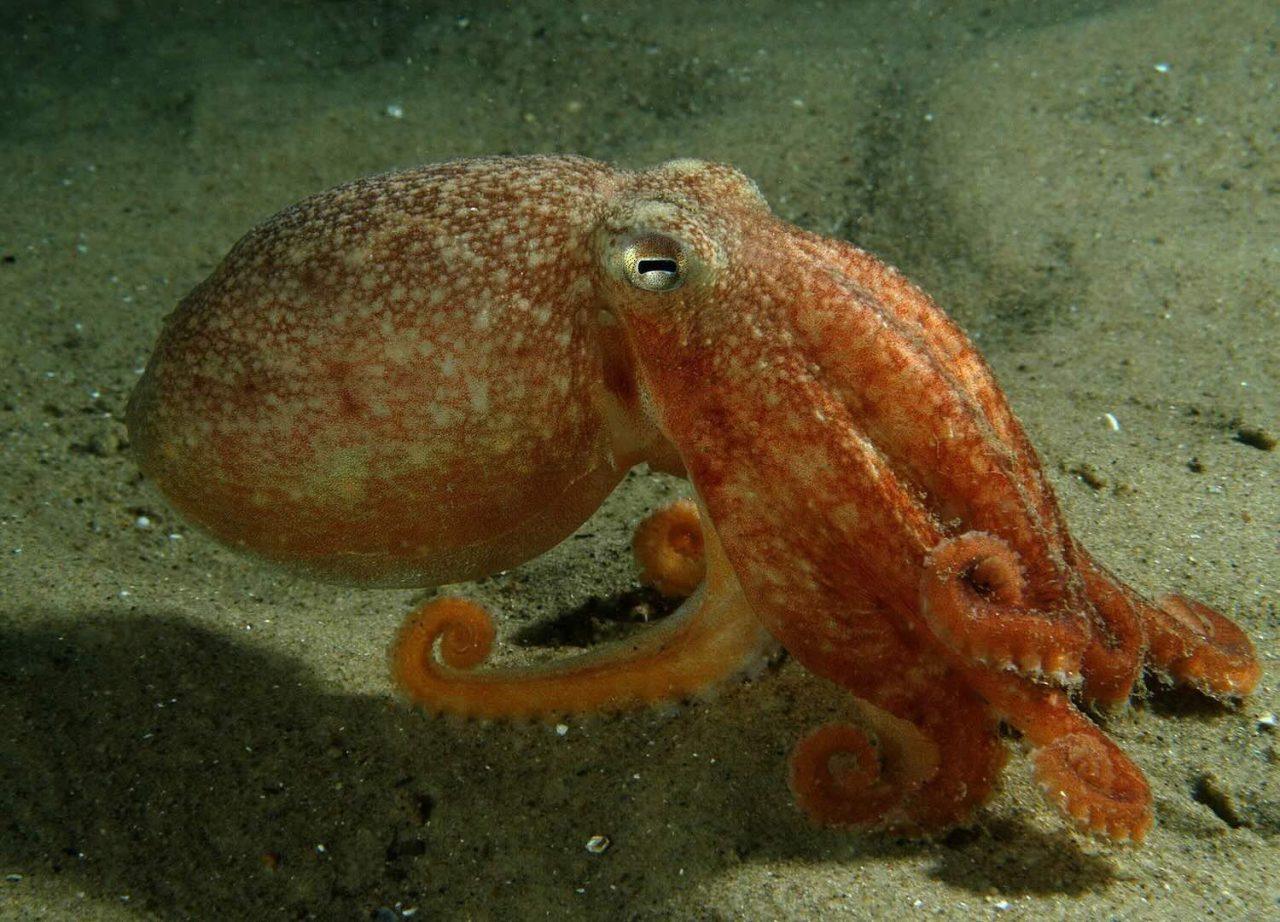
The giant squid has increased significantly in British waters and is moving further and further north. Stock image.
‘One of the surprising things is how little warming is actually needed to push organisms over that threshold so that they die,’ says marine ecologist John Bruno of the University of North Carolina.
But there are also winners. Octopuses, for example, have become significantly more common in British waters and have now even been spotted off the coast of Scotland.
Habitat-forming species such as corals are dying out, and then more weed-like species that exploit the changes – such as slimy algae – are proliferating and taking over.
Since 17 June, sea surface temperatures away from the poles have been higher than ever before recorded at this time of year. The previous record-breaking years [the years with the highest temperatures] are 2023, 2024 and 2025.
Currently, the temperature is above 21 degrees, a level never recorded before 2023.
Around Europe, sea surface temperatures reached record highs along the Atlantic coast and in the western Mediterranean in July. In July, the average temperature in the Mediterranean was 27 degrees.
Source: Copernicus, WWA