As the ocean warm – the whales fall silent
Sound is the whale’s most important tool for finding food, navigating and finding a mate. Now, global warming is wreaking havoc in the oceans. As the acoustic landscape changes, whales are forced to move, alter their mating calls – or fall completely silent when hunger takes over.
Text: Izabella Rosengren
Imagine a creature in which a third of its body is adapted to emit and receive sound. Its large head houses complex organs that are specifically adapted not only to produce sound but also to direct it and analyse the sound wave as it returns. The creature uses sound to communicate with others of its kind, find food, detect predators, find its way and to find a mate. This is how it has worked for millions of years. But now something is happening. The environment in which the creature lives is warming up very rapidly, and as it warms, the conditions for producing and transmitting sound are changing. Behaviour and physiology that are the result of millions of years of evolution are suddenly no longer working. The catastrophe is a reality.
For whales, sound is crucial
Such is the reality for the world’s whales. For whales, sound plays an incredibly important role. One could say that sound is a prerequisite for being a whale. However, baleen whales and toothed whales communicate in completely different ways – baleen whales using a U-shaped larynx, and toothed whales using fat-filled tissues inside the head, known as ‘monkey lips’ in English because they resemble a monkey’s mouth. The sounds they produce also differ. Baleen whales communicate at low frequencies, often below 200 hertz, whilst toothed whales communicate at frequencies above 17,000 hertz.
As the sea warms, not only does the physical environment change, but so does the acoustic landscape. Warmer water and changes in salinity affect the density of the ocean and create what are known as sound layers. As the ocean warms, researchers have discovered that sound can become ‘trapped’ in warmer surface layers, causing the whales’ communications to propagate horizontally rather than vertically.
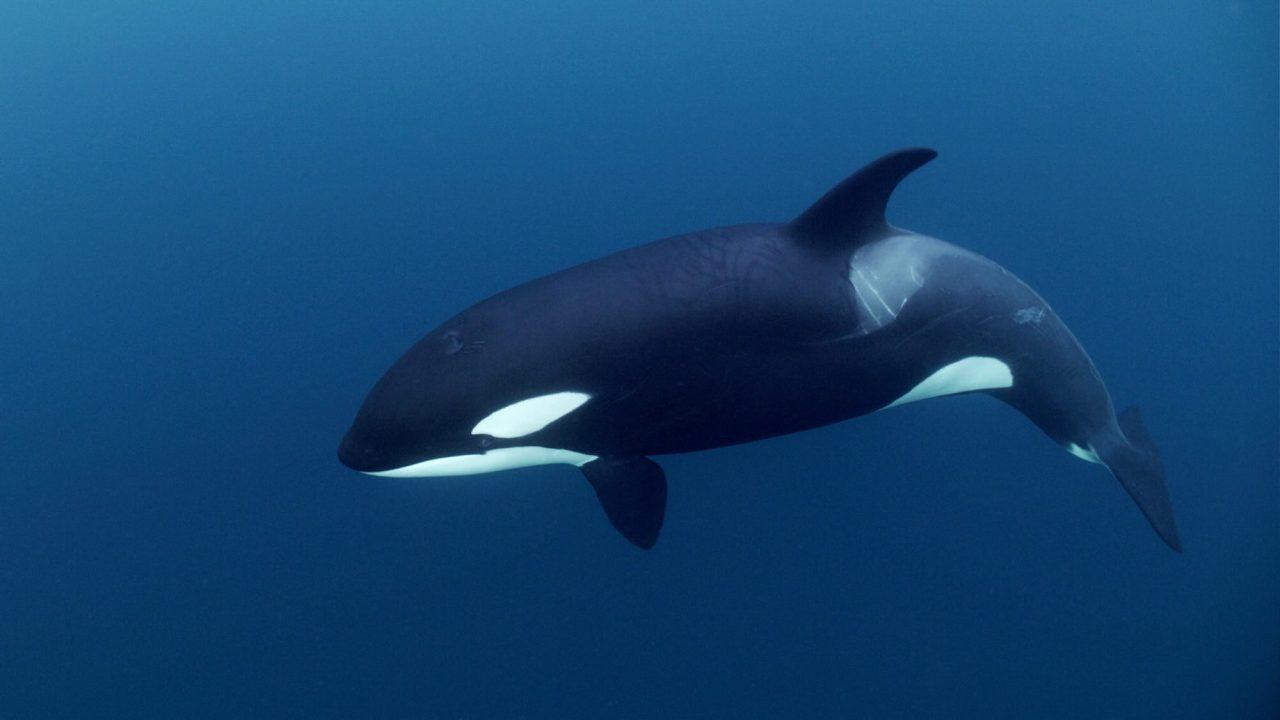
Sound travels faster in warmer water
Warmer water also causes sound to travel faster, as molecules gain more energy and can move more quickly. Whilst this may sound positive, it contributes to ‘acoustic smog’ – that is, background noise that makes the sound environment noisier, making it harder for whales to distinguish important signals.
In 2022, researchers discovered two acoustic ‘hotspots’ where the speed of sound is thought to increase particularly sharply: the north-western Atlantic and the Greenland Sea. The research team used the calls of North Cape whales – a species of which fewer than 380 individuals remain – to model what the ocean’s soundscape would look like in the year 2100. They concluded that the whales’ calls would travel both further and faster the warmer the ocean became.
‘Marine mammals rely on sound at every stage of their lives, including when foraging and mating. Variations in the speed of sound caused by climate change could therefore affect the species’ vital functions in these areas,’ says Alice Affatati, one of the researchers behind the study.
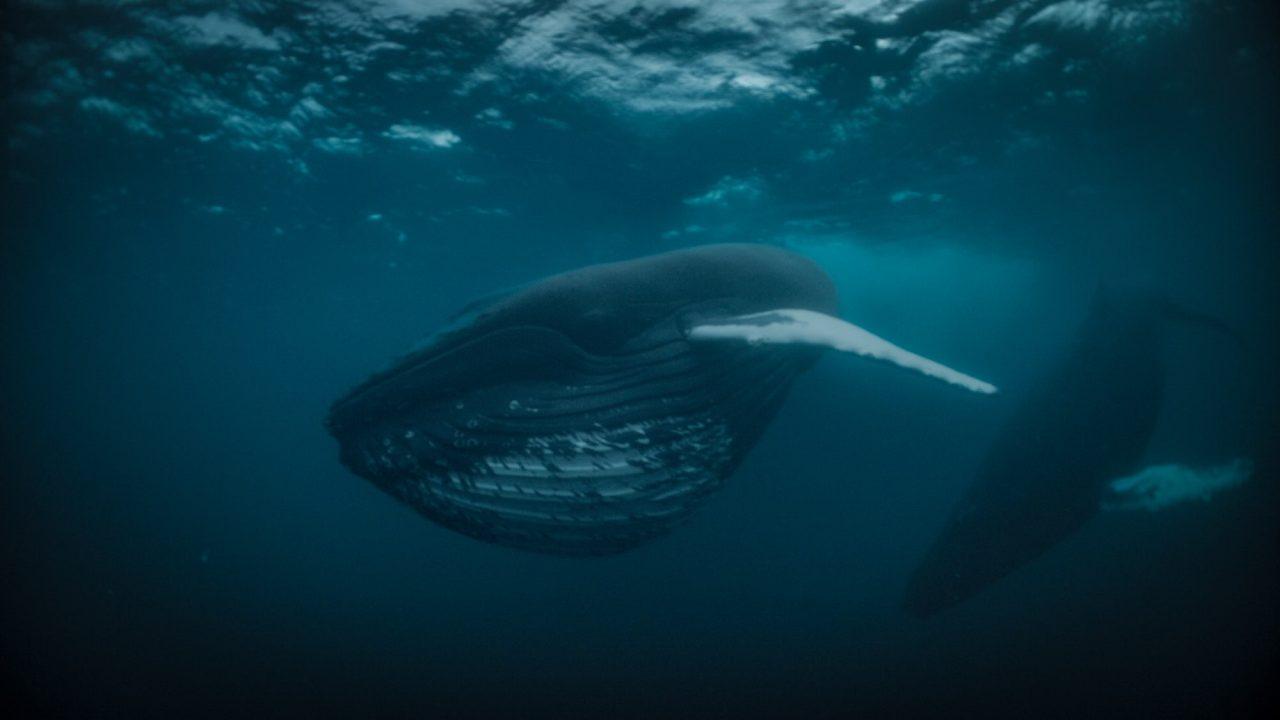
Whales move away when their surroundings become too noisy
In response to the noisy environment, there is a risk that the whales will move to another area that is unexplored to them. And when wild animals are forced to change their established behaviour, this rarely has positive consequences. Rather, it increases the risk of starvation and collisions with ships.
However, when background noise becomes too loud, some whales have been able to change the frequency at which they communicate. This includes the blue whale, which, due to increased noise in the oceans – caused primarily by shipping traffic – has lowered the frequency at which it communicates by 31 per cent since the 1960s. This is so that they can reach individuals further away (low frequencies travel further). The problem is that a change in behaviour requires energy in the form of food, which is becoming increasingly scarce in the oceans.
Based on this, an American study showed that blue whales reduced their vocal communication by almost half during years of repeated marine heatwaves.
‘The reduction in blue whale vocalisation during the two marine heatwaves was significant compared with the period without heatwaves. Specifically, the frequency of blue whales’ B-sounds decreased by 40 per cent,’ says Dawn Barlow, a researcher at Oregon State University.
A B-call is a long, deep, rumbling and monotonous sound associated with blue whale mating. It is likely that these calls play an important role in finding and attracting a mate.
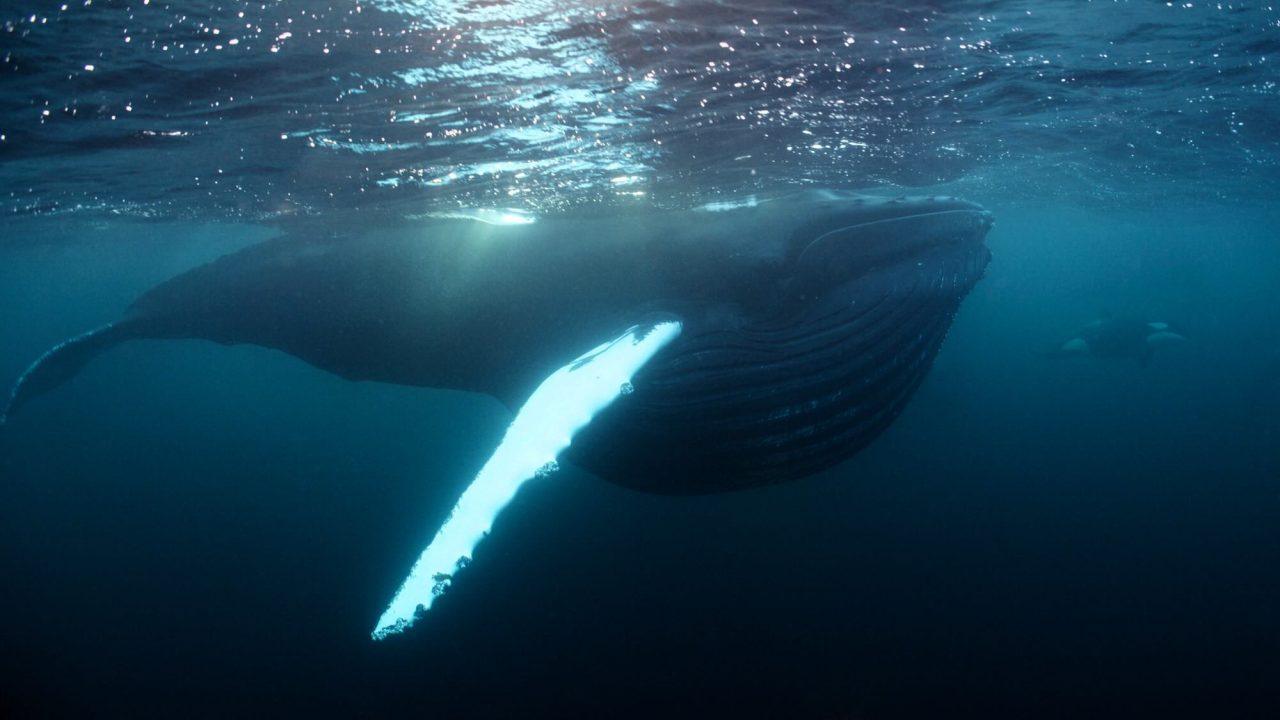
In warmer waters, the krill disappeared
The decline is unlikely to be primarily due to the heat itself, but rather to the fact that the warm water caused the krill to disappear (their numbers fell by up to 95 per cent during the heatwaves) and forced the whales to forage in areas where they do not normally forage. When the whales were forced to prioritise foraging over communication, the sea fell silent. Ultimately, the lack of food meant that the blue whales did not reproduce as successfully as when food was plentiful. In other words: starvation meant they lacked the energy to mate.
‘Poor physical condition resulting from a reduced supply of prey can lead to lower reproduction rates, as the whales must use all their energy just to survive,’ says Dawn Barlow.
As well as the warming of the oceans having direct negative consequences for whales, there are also indirect consequences. As the polar ice caps melt and the water warms, shipping traffic in these parts of the world will increase. This means that whales – including belugas, narwhals and bowhead whales – which have had the Arctic and Antarctic as relatively protected havens thanks to the ice, will be left unprotected, and the risk of collisions with ships and marine noise will increase.
About Deep Sea Reporter: Our ambition is to examine and report on issues related to the sea and the life that exists beneath its surface. We operate in the public interest and are independent of political, commercial, and other interests in society.