
For the first time in half a century, Sweden is investing in large modern warships. The new frigates cost billions and can hunt submarines, act as floating air defence and secure the vital sea route to Sweden.
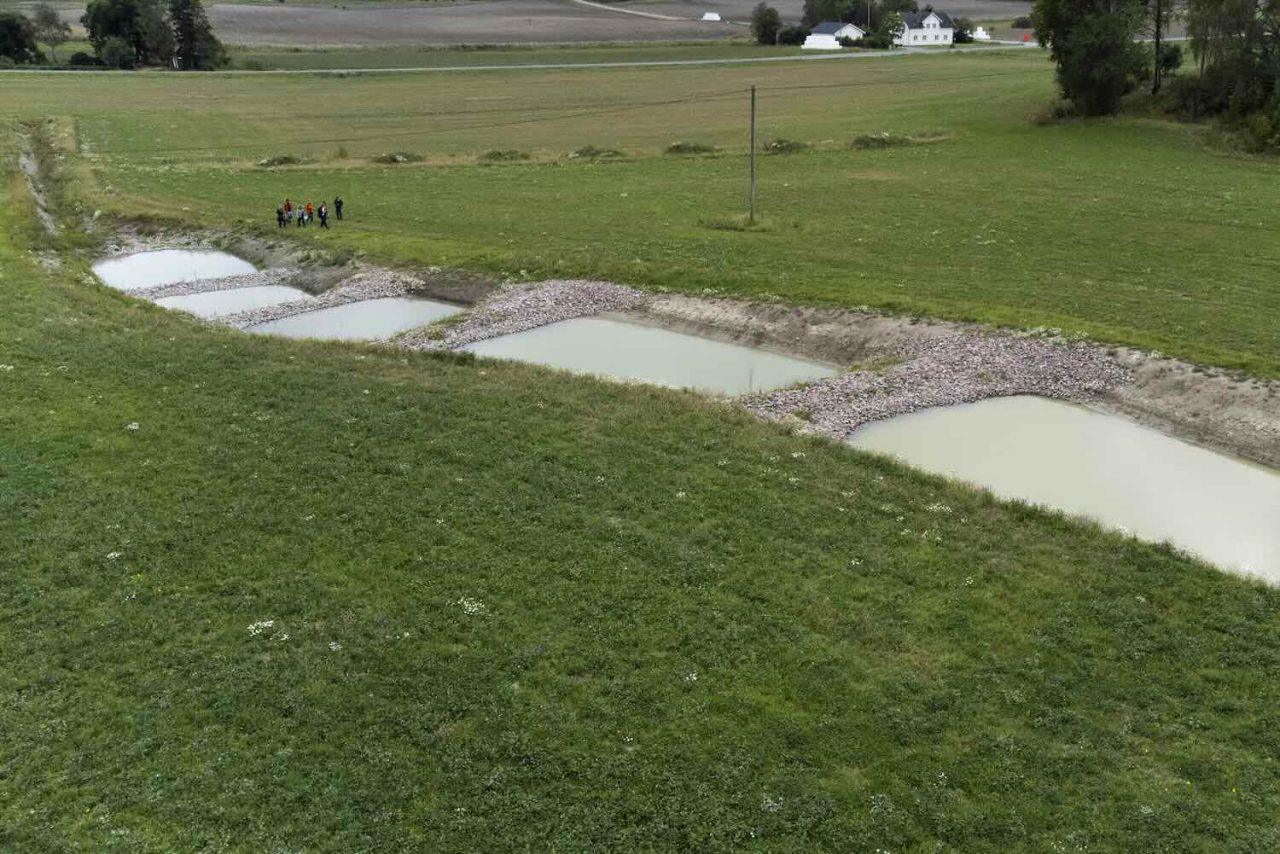
Toxic bathing water, dead fish and dead seabeds – the impact of climate change on the sea is becoming increasingly clear. But the fight against marine death begins well inland. ‘2018 was a wake-up call,’ says the Swedish farmer Erika Olsson, one of many who have created wetlands.
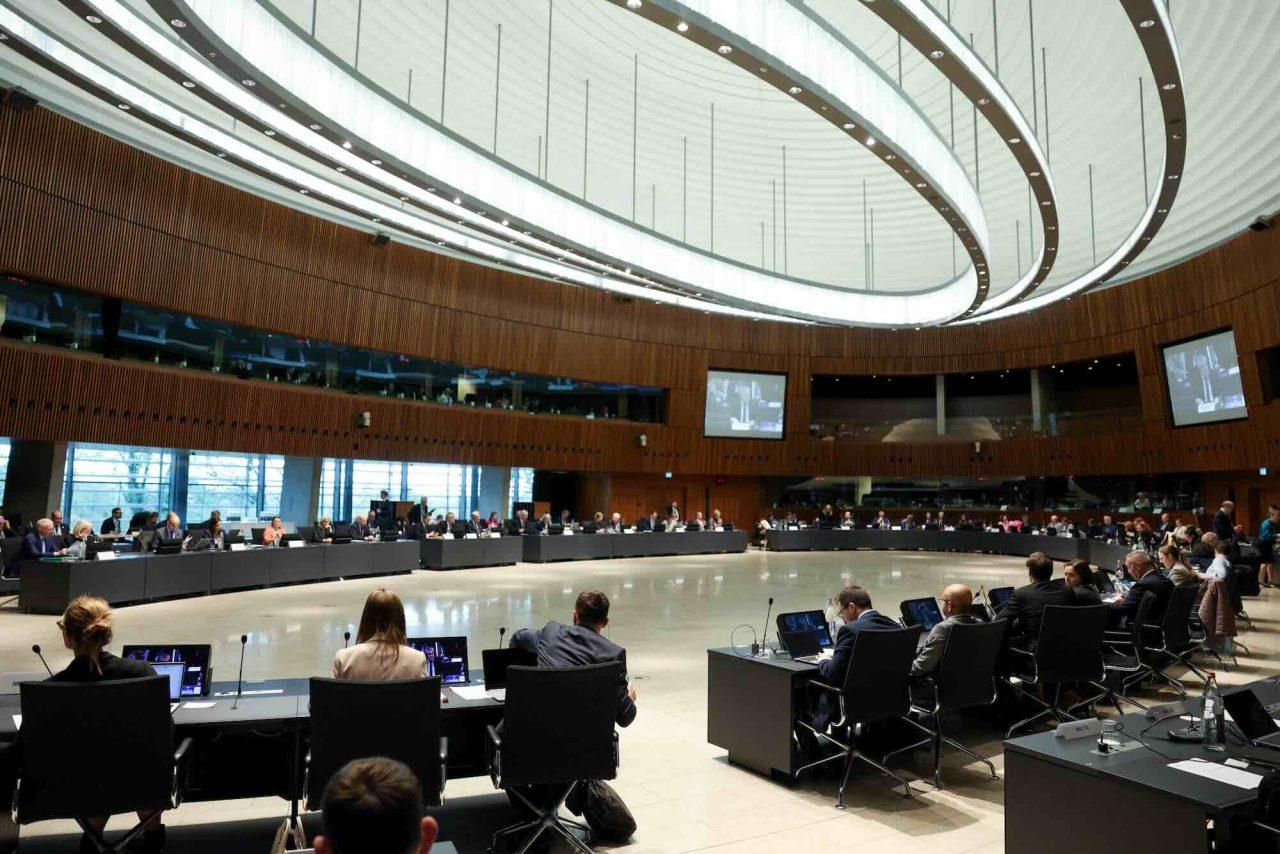
The quotas for herring fishing in the Baltic Sea in 2026 have been decided by the EU Council of Ministers. Now, voices are being raised from several quarters that the fishing quotas in the Bothnian Sea and Bothnian Bay are illegally high.

The world's largest environmental network, IUCN, has this week adopted motion 061 at its international nature conservation congress, calling on states to recognise ecocide, i.e. large-scale environmental destruction, as a serious crime under national and international law.

The European Commission proposes that the fishing quota for herring in the central Baltic Sea – which was doubled this year amid widespread criticism – be kept. At the same time, it wants to reduce herring fishing in the Gulf of Bothnia.

Security is tight as the Baltic Sea gets its largest offshore wind farm, just a few nautical miles from Kaliningrad in Russia. “We must be ready,” warns the Polish government.

Outdated rules governing access to the Baltic Sea must be changed due to Russia's shadow fleet, urges Polish Foreign Minister Radoslaw Sikorski.

The NATO exercise Baltops, which begins tomorrow in the Baltic Sea, is, according to Russia, ‘extremely provocative’. The exercise, in which Sweden and the United States are participating, is seen as a build-up to combat against Russia.

The Baltic Sea porpoise is currently endangered, with its population at historically low levels. The EU wants Sweden to implement measures to save it. But it turns out to be more difficult than expected.

A couple of weeks ago, the Swedish Agency for Marine and Water Management (HaV) concluded in an investigation that two of the three seal species that inhabits Swedish waters are declining. The grey seal is increasing overall, but it has moved over to the Finnish side, the harbor seals are threatened by a total population crash, while the ringed seals have a stable population so far. Yet the government now wants to increase seal hunting to save the fish.

In February, the Swedish Agency for Marine and Water Management extended the trawling ban from four nautical miles to twelve nautical miles. The ban intends to protect herring in the central area of the Baltic Sea. But marine ecologist Henrik Svedäng do not believe it will make a difference.

Methane from the exploded Nord Stream pipeline has spread to large parts of the southern Baltic Sea. Over 20 marine protected areas are affected. This is according to a new study. - ‘How long the methane stayed in the sea and how far it could spread was quite striking to me,’ says Bastien Queste, associate professor of oceanography and co-author of the study.

A Swedish company has been authorised to investigate the possibility of extracting mineral nodules from the seabed in the Gulf of Bothnia. They are said to be important for the green transition. Researchers will now provide answers to how the extraction would affect the organisms living at the bottom of the sea.

I write this as COP 16, the UN summit meeting on biodiversity, has just ended in the Colombian coastal city of Cali. On a human level there is progress: indigenous people are promised a stronger voice in the fight to protect threatened species on planet Earth. Many of these nations live near the oceans, some on islands that are also threatened with extinction because of climate change. Their voices will be important for the protection of those who inhabit the oceans.

Several countries, including Sweden, have criticized Norway's plans for deep-sea mining. However, a Swedish company has now been granted permission to explore the possibilities of extracting mineral nodules from the seabed off Skellefteå in the Gulf of Bothnia.

The conflicts within Swedish fishing are very fierce. Small-scale coastal fishermen on the east and south coasts face a small number of giant trawlers from the West Coast. I was looking forward to tough discussions and fruitful exchanges at this year's Fishing Forum. But met with pleasant company in a luxurious mingling environment.

I am now forbidden to fish for cod and the pike has disappeared from my bay. I'm looking for scapegoats. Who is responsible for the condition below the surface in the Baltic Sea? Small-scale professional fishermen along the east coast have been raising the alarm for several years that the herring has declined sharply. At the same time, the large-scale trawling in the open sea has continued to catch large quantities, which have gone directly to the fishmeal factories in Denmark.

Ringed seal pups become homeless as the Baltic Sea's ice shrinks. Now it is being tested to build caves out of plastic and plywood to make the cubs survive in an increasingly hot climate.

We asked Tero Härkönen, who has researched seals since the 1970s, three questions. Is it the seal's fault that the fish disappear? Is the seal doing something wrong? How important is the seal to the ecosystem?

Seal populations rebound after hunting ban and environmental efforts, sparking debate between conservation needs and the impact on fishing. Dive into the story.

The Swedish government is moving ahead with plans for two offshore wind farms, a project called "Västvind" in the North Sea and a project called "Dyning" in the Baltic Sea.

Deep Sea's attention-grabbing film "The Power of the Sea" has set the debate about large-scale fishing in the Baltic Sea in high gear. In the days after Sunday's premiere on SVT, politicians, researchers, and environmental organizations have condemned the EU Council of Ministers and Sweden's Minister of Fisheries. The debaters claim that the ministers' decision, which is against the EU's fisheries law, threatens the herring in the Baltic Sea.

In a report from 2020, published by BalticSea2020, the authors believe that large-scale fishing in the Baltic Sea is neither economically nor financially profitable for the state. On the contrary, it costs us all big money.

The EU fisheries ministers have in a compromise agreed on this years herring fishing in the Baltic Sea next year. As usual, we can continue to fish, despite the fact that, according to many observers, the herring are running out. But there is one law that the ministers seem to forgotten about, which could lead to them having to tear up this year's compromise. Paragraph 4.6 of the EU's multi-year management plan for the Baltic Sea (MAP).

