A dangerous gamble – with sharply increased herring quotas in the Baltic Sea
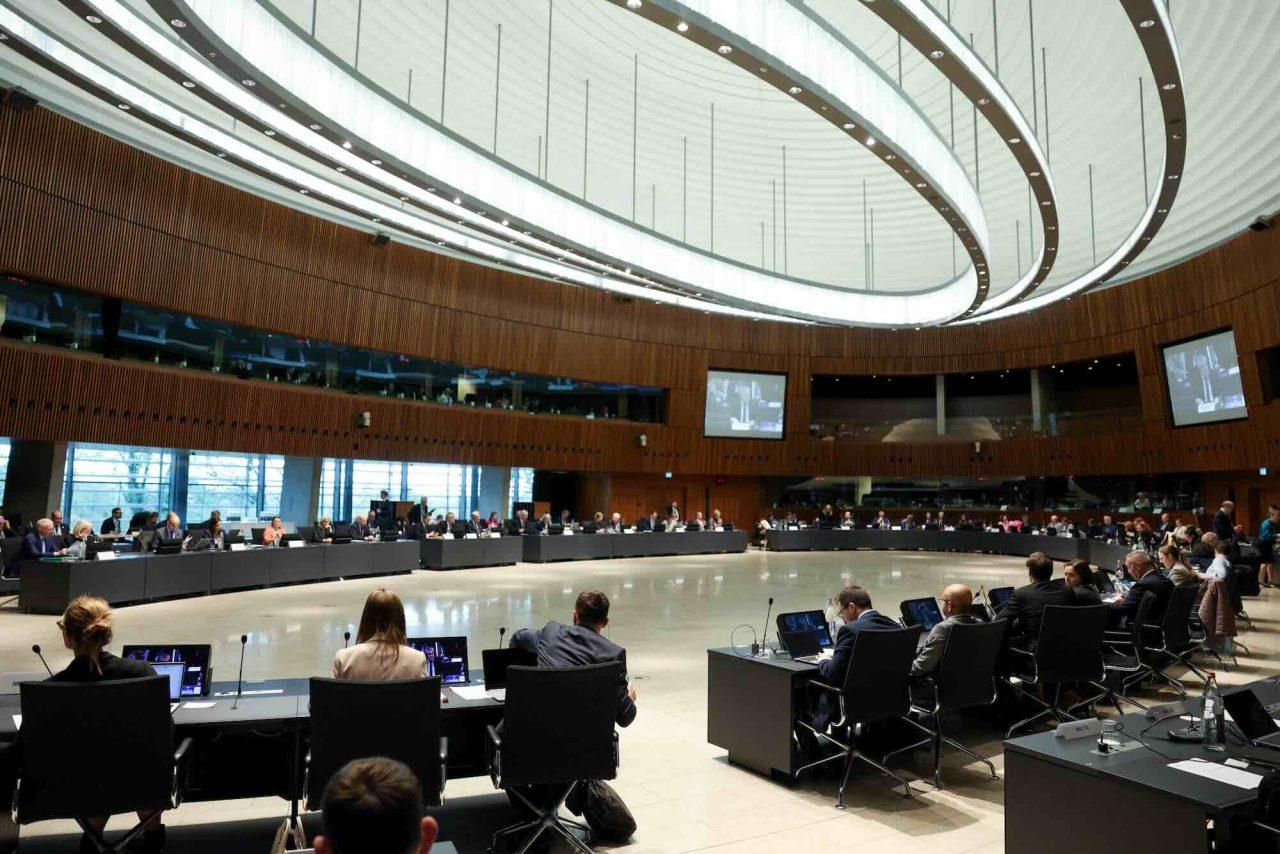
Herring stocks in the Baltic Sea have long been on the brink of collapse, but according to the International Council for the Exploration of the Sea (ICES), the stocks now appear to be increasing. ICES therefore believes that quotas can be increased – by up to 122 per cent
Text: Amanda Saveland
In recent years, fishing pressure on herring has been comparatively low. Although the quota for herring fishing in the central Baltic Sea has more than doubled over the past two years – a move that has been heavily criticised for pushing the stock towards collapse – one has to go back to 2013 to find lower quotas set for the area.
“The fact that we are now seeing an increase in biomass suggests that the fish are beginning to recover as quotas are reduced,” says Sara Söderström, a researcher in fisheries management at Stockholm University’s Baltic Sea Centre.
At the same time, she points out that estimates of the number of spawning-age fish are based on uncertain figures with large margins of error. This should prompt great caution, particularly as herring is such a vital driver of the ecosystem.
‘Herring and sprat in particular are food for an incredible number of other fish and animals. What’s more, they feed on plankton and other organisms, which makes them a vital part of energy transfer in the sea. So we need to be careful about fishing in that particular part of the ecosystem,” says Sara Söderström.
Risk of collapse – despite positive signs
Sportfiskarna has also highlighted the risks of relying too heavily on the positive trend. The organisation’s Secretary-General, Sten Frohm, points out that the same thing has been seen before with other fish species, and that the trend then quickly reversed again.
‘With cod in the Baltic Sea, things looked really bad for many years, and then all of a sudden a recovery was noticed.’ And what did they do then? Well, they pushed ahead with large quotas and then the stock crashed,‘ he explains.
Today, cod stocks are so depleted that not even several years of fishing bans have had any effect on them. The fact that herring and sprat now appear to be increasing, and are also showing better growth, is therefore a good sign. It signals that the stocks are not yet so weak that measures such as reducing fishing pressure become ineffective.
‘It is extremely positive that they are noting good recruitment of herring and sprat, but use this to increase the safety margins and safeguard fish stocks in the longer term,’ says Sten Frohm.
Could increase by 122 per cent
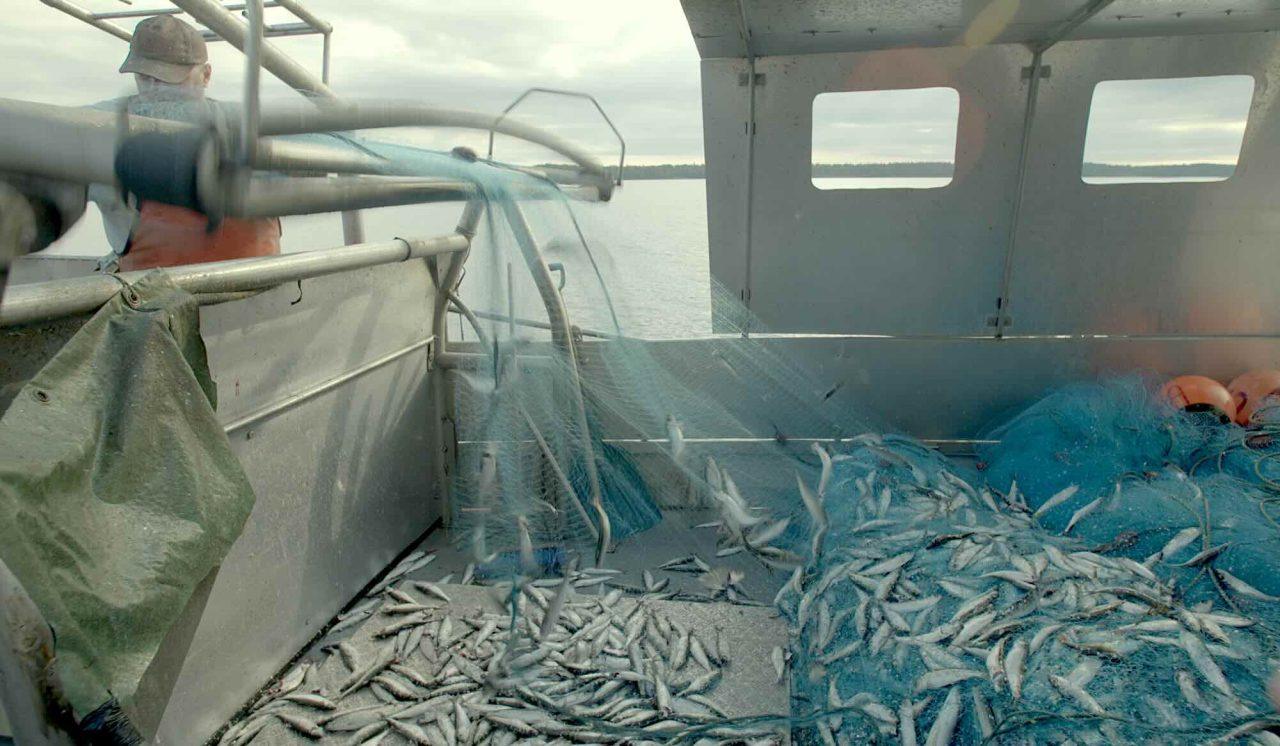
EU fisheries policy is based on annual estimates from ICES regarding the total allowable catches (TACs) that can be taken for different stocks and management areas. The Council of Ministers then decides on the actual catch limits. Last year, the quota for herring fishing in the central Baltic Sea stood at 96,463 tonnes, plus a Russian share of 27,000 tonnes. If the Council of Ministers were to follow ICES’s advice to raise the quota to 274,332 tonnes, this would represent an overall increase of 122 per cent.
For other fish species, such as plaice, the advice is usually given as an exact number of tonnes. This is not the case with herring. Instead, a range is provided, within which the Council of Ministers can choose the level at which to set the quota. The rule is that they must not exceed the upper limit, but they may fall below the lower limit, which for next year would still result in the herring quota in the central Baltic Sea increasing by 75 per cent.
According to Anna-Karin Trixe, CEO of the trade organisation Vi svenska fiskare, this is a good level.
‘There is still scope for a slight increase, and that is of course positive from our perspective,’ she says.
At the same time, she argues that the most important thing for their members is not primarily the amount of fish they are allowed to catch, but predictability. And to achieve that, stocks need to become more stable over time.
‘It is possible to have a management system that actually maintains stocks at a good level. That would also allow us to move away from these huge fluctuations in quotas, which are raised and lowered very significantly from year to year. Because that’s not particularly good for the fishing industry either,’ says Anna-Karin Trixe.
The Council of Ministers is breaking its own rules
In 2024, the herring quota in the central Baltic Sea was reduced by 43 per cent, only to double the following year. Quotas in the Bothnian Sea have fluctuated in a similar way. This year, the quotas fell sharply, whilst next year’s proposal is for an increase of up to 65 per cent.
‘These large fluctuations are a problem, and this is, of course, because the stocks are so close to the limit,’ says Sten Frohm of Sportfiskarna.
He emphasises that a crucial factor in this is the so-called 5 per cent rule, or the emergency brake as it is also known.
This is because it is not only the quotas set from year to year that regulate fishing in the Baltic Sea. There is also a more long-term management plan, which stipulates, amongst other things, that the Council of Ministers must never decide on catch levels that would put the stock at risk of collapse with a probability of more than 5 per cent. And although fishing pressure has been comparatively low in recent years, explains Sara Söderström, this ‘emergency brake’ has been ignored on several occasions.
‘Quite simply, a much higher risk has been taken than is permitted under the regulations.‘
‘If the rules had been followed, the quotas should have been set much lower than they actually were, and we would probably have seen a much stronger recovery,‘ says Sara Söderström.
Weak stocks lead to greater fluctuations
The fact that the Council of Ministers has repeatedly breached the rules has probably contributed to keeping stocks at a critical level. But as soon as stocks have fallen below the 5 per cent threshold, there has also been a swift move to sharply increase the quotas, which has led to the major fluctuations that both Sten Frohm and Anna-Karin Trixe want to see eliminated.
‘This is an example of mismanagement of a resource that has affected the entire ecosystem. So we have a management system that isn’t working,’ says Sten Frohm.
From maximum catches to sustainable stocks
The ICES’s remit is to ensure that policymakers base their decisions on scientific evidence. What factors they should include in their assessment is determined by the European Commission, and there is massive criticism of the way the Commission formulates this remit. As recently as last month, the so-called Baltic Sea report, drafted by MEP Isabella Lövin (MP), was passed by the European Parliament. In addition to calls to halt industrial trawl fishing, a large part of the report consisted of proposals on how ICES’s mandate should be reformulated.
One proposed change is to stop asking ICES to determine the maximum allowable catch, and instead task them with establishing what is required to build sustainable stocks.
‘It would by no means be impossible to give them such a mandate for a period of time, at least,’ says Sten Frohm.
Lack of concern for the ecosystem
In previous years, the instructions to ICES explicitly stated that no account should be taken of the EU’s other environmental objectives, such as the Marine Strategy Framework Directive. That wording has now been removed. However, there are still other important factors that are being overlooked, according to Sara Söderström.
‘They do not take other species or the ecosystem itself into account to any great extent; instead, they focus very much on a species-by-species basis within a particular management area. And this is problematic,’ she says.
Conflicting advice highlights the difference
One example of just how significant the differences can be, depending on the extent to which the ecosystem as a whole is taken into account, is the herring fishery in the Irish Sea. There, the stock mixes with herring from the Celtic Sea, for which ICES has been recommending a zero catch for several years. Consequently, in its advice for 2025, ICES stated that, if Celtic Sea herring were taken into account, a zero catch should also apply to Irish Sea herring. If, on the other hand, no such account were taken, the quota could instead amount to 5,223 tonnes.
‘The common fisheries policy states that we should adopt an ecosystem-based approach, which includes what is known as multi-species management. This involves looking at how different fish species affect one another and how fishing impacts them. And in this regard, we know that we need to fish much less for forage fish such as herring and sprat,’ says Sara Söderström.
About Deep Sea Reporter: Our ambition is to examine and report on issues related to the sea and the life that exists beneath its surface. We operate in the public interest and are independent of political, commercial, and other interests in society.