The other oil spill that threaten the Black Sea
Ukraine’s flag is often said to represent a wheat field under a blue sky. Yet the flag’s yellow field is also reminiscent of another important crop: the sunflower.
Sunflowers are the national flower of Ukraine, a symbol of culture and identity, and Ukraine is the world’s biggest exporter of sunflower oil. This oil, used in cooking and for skincare, is often stored in massive tanks along the Black Sea coast and then shipped across the sea, destined for the world’s cabinets.
Text: Elyse Hauser
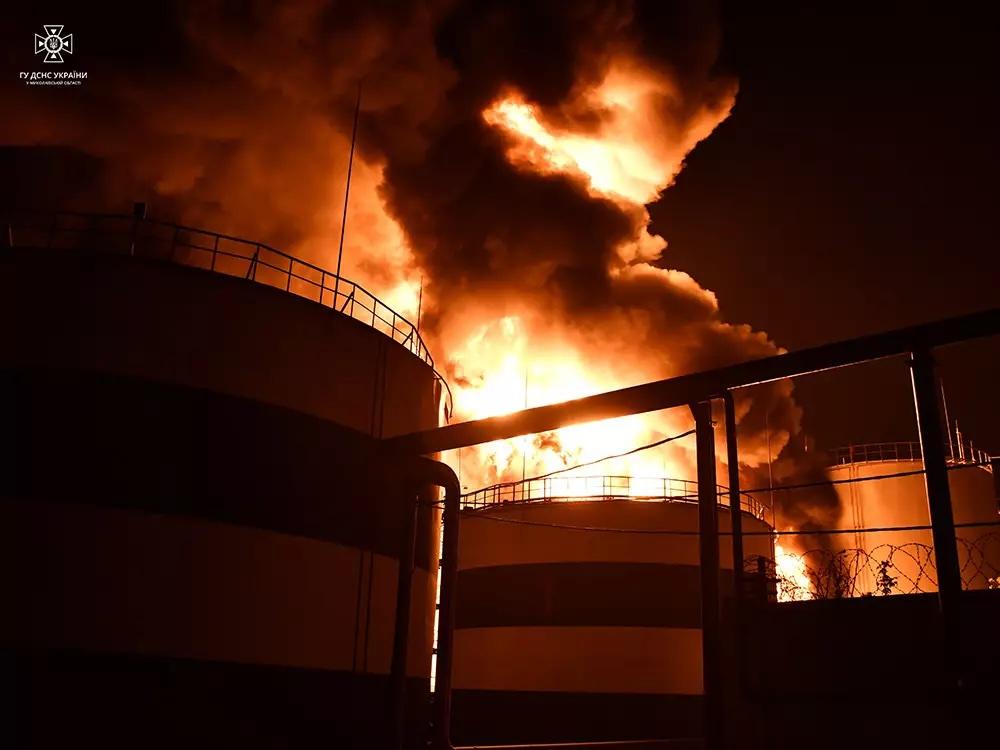
Yet these oil caches have become targets for Russian attacks in a wartime effort to destabilize Ukraine’s economy, environment, and morale. In April 2026, Russia destroyed a tank holding 6,000 tons of sunflower oil in the coastal city of Chornomorsk—and that’s just one of many Russian attacks on Ukraine’s sunflower oil since 2022.
In onshore tanks and in the holds of ships, sunflower oil is liquid gold, a valuable and healthy product. Yet spilled into the sea in massive quantities, the natural substance becomes poison to marine life. Research suggests that harms from sunflower oil in the sea can persist for more than half a decade, which means the damages from events like the April spill in Chornomorsk are only just beginning.
A new attack emerges
Fuel oil is a traditional wartime target, since it has clear military applications. Yet Russia has put sunflower oil, a civilian product, in the crosshairs routinely during its war on Ukraine. In July 2026, Ukraine’s military likely also hit a sunflower oil tank near the Strait of Kerch, as the country targeted a Russian supply base in its self-defense efforts.
Compared to petroleum spills, there’s limited research on how large plant oil spills affect ecosystems. For the people working to protect Ukrainian wildlife and waterways, though, many risks have become all too clear.
“There is a misconception that sunflower oil, being a food product, has no harm,” says Vladyslav Balynsky, who leads Green Leaf, an environmental NGO in Odessa. (Green Leaf team member Vira Popandopoulo provided interpretation for the interview.)
Even though public awareness hasn’t yet caught up, the harm is obvious to scientists studying the impacts. When a large quantity of sunflower oil enters the water, it launches a longterm process of ecological damage.
Surface life suffocates
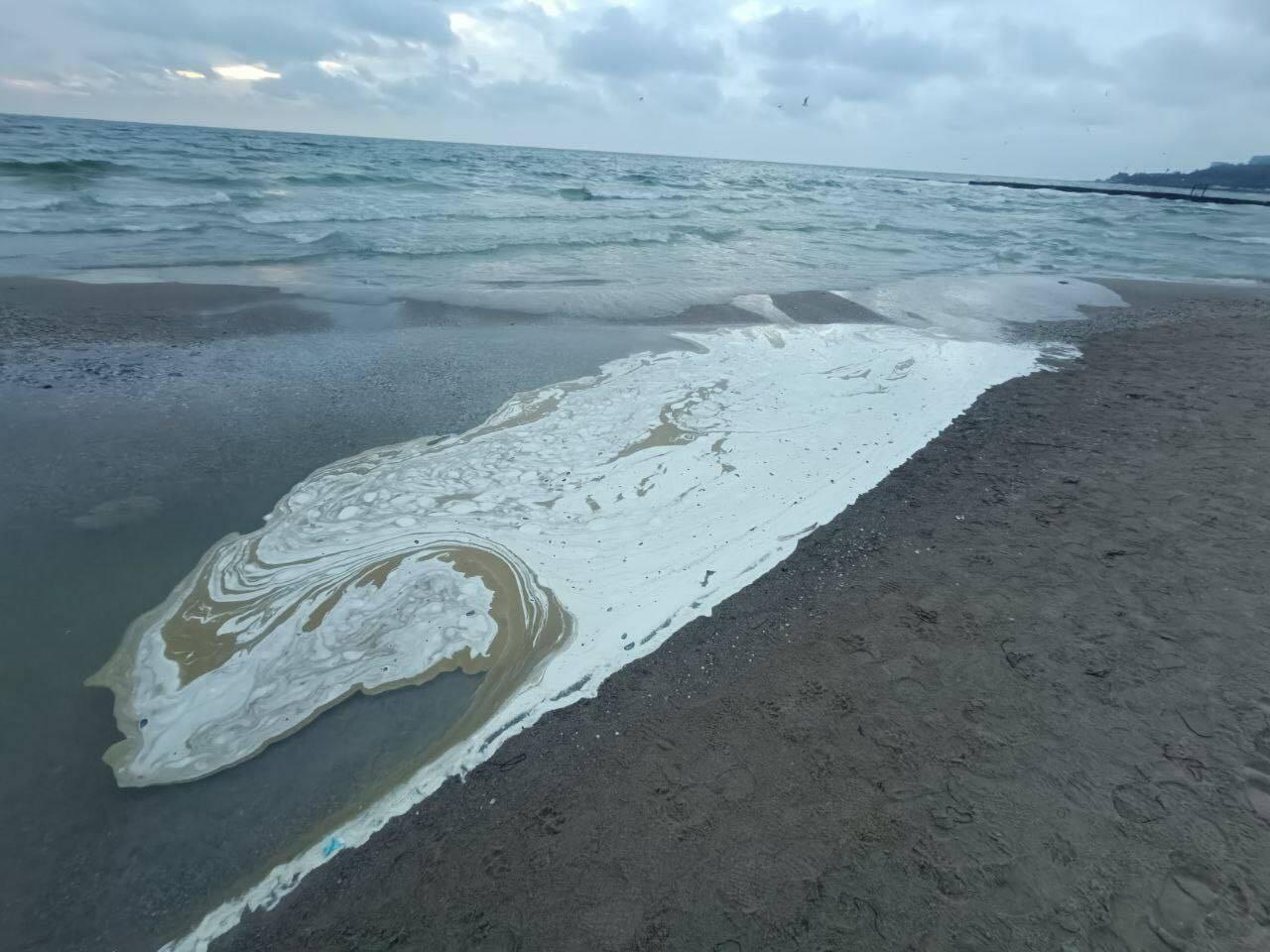
Initially, spilled sunflower oil floats on the water, creating an oil slick. It coats not just the surface of the water, but the skin, scales, or feathers of animals that come in contact with it.
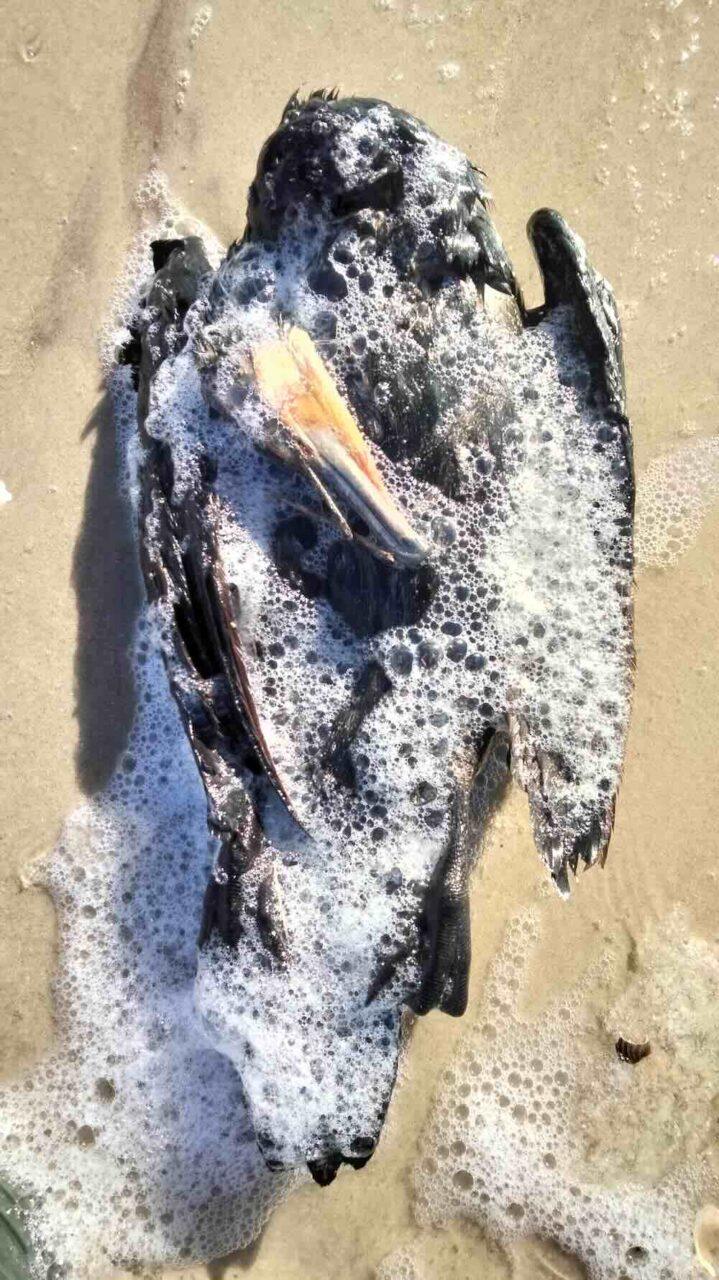
Fish-eating birds often spend winters on and around the Black Sea, explains Ivan Rusev, an ecologist at Ukraine’s Tuzly Lagoons National Nature Park. When sunflower oil coats their skin and feathers, it disturbs the birds’ ability to regulate heat, which can be fatal.
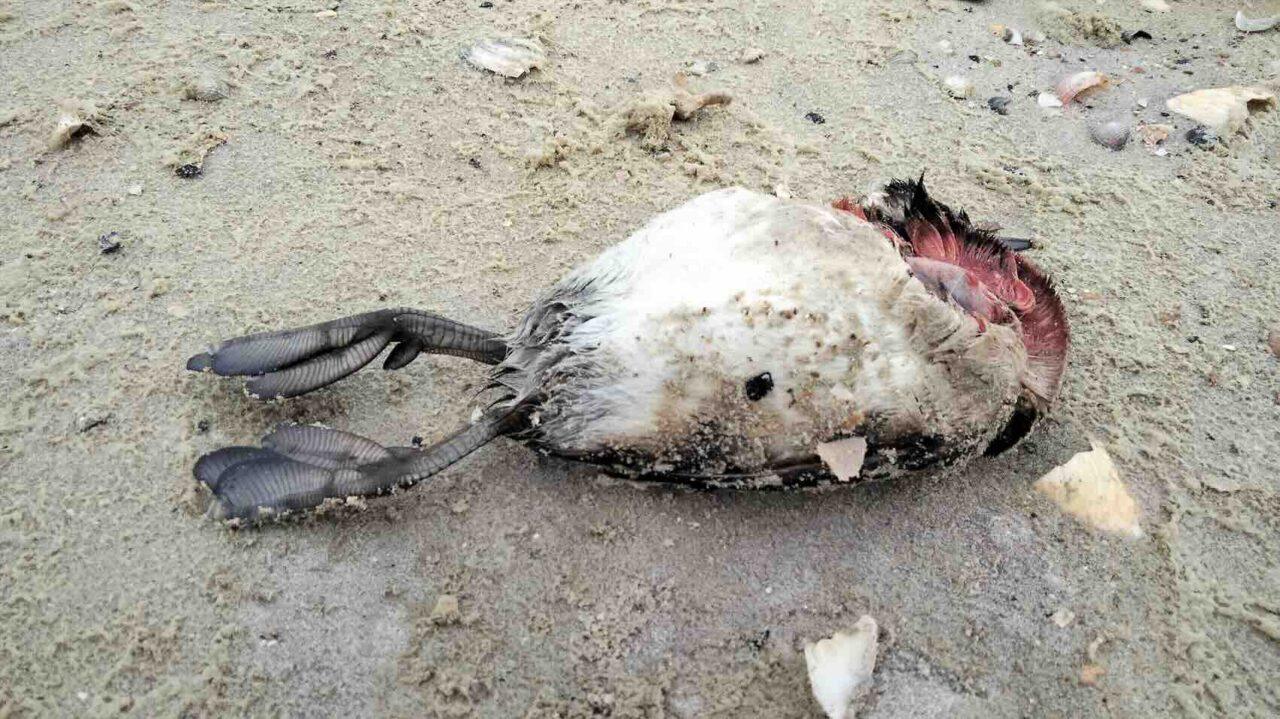
After a sunflower oil spill near Odessa, “We collected the dead birds in our national park during February and the beginning of March,” says Rusev. “We collected about 110 birds, different species.” Swans, grebes, cormorants, and egrets were among the dead birds they picked up, but the total mortality was much greater than this sample. “We estimate that this disaster killed at least 5,000 birds which were wintering on the Odessa Bay and the Black Sea,” says Rusev.
Not all of the oil-stricken waterfowl died right away. At home in Odessa, Rusev’s three grandsons brought him some birds that had been coated in sunflower oil, still alive. “They tried to wash them. They used many, many different chemicals, soap and shampoo, to wash them, but it’s very, very difficult,” he says. “After that, I brought these birds to the national park, and our staff tried to help them, but it’s impossible.” According to Rusev, spilled sunflower oil is even more dangerous to birds than fuel oil, which at least can be washed off.
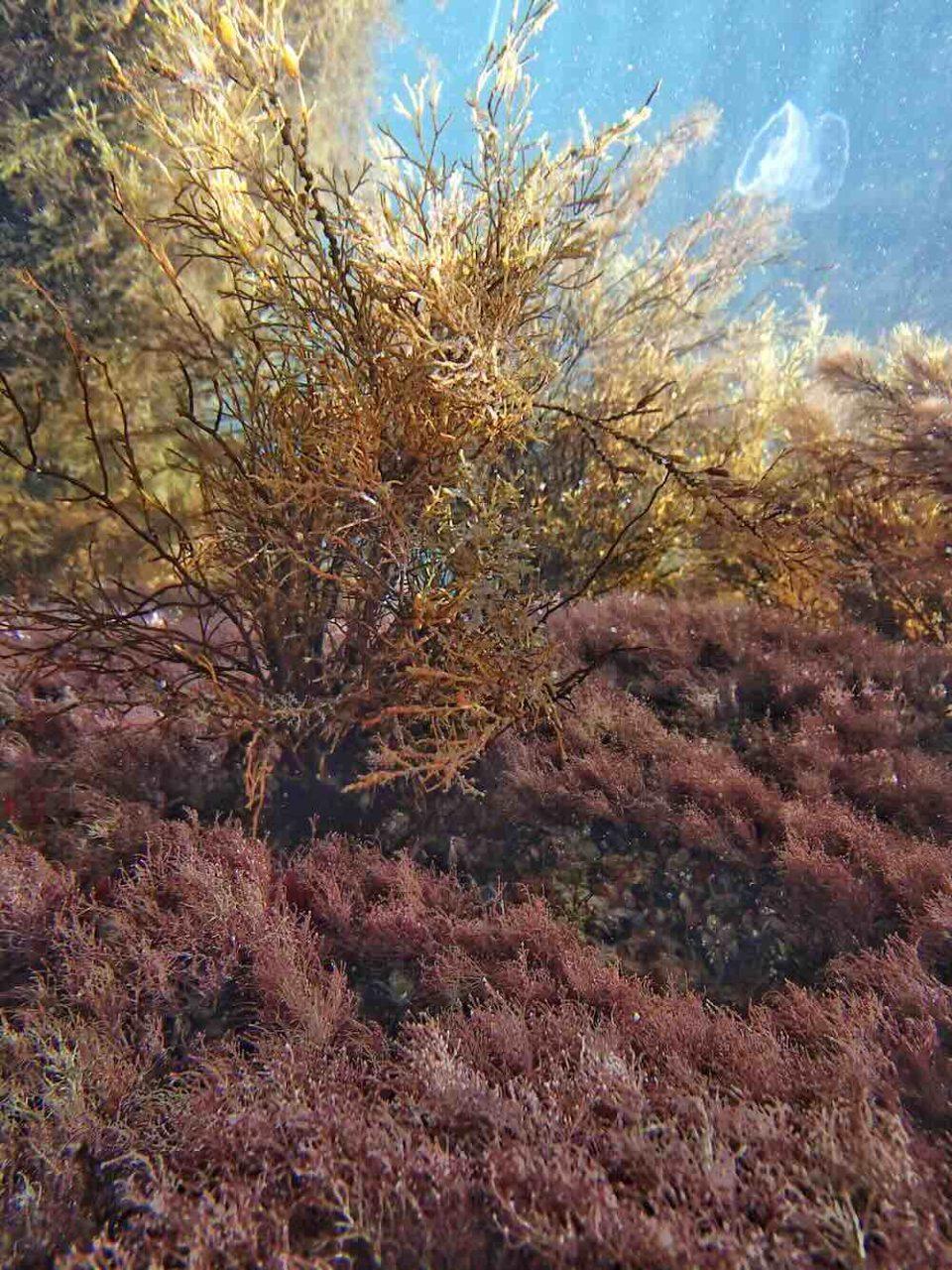
Even jellyfish, often considered resilient to ecological harms, have been killed off by the sunflower oil spills. Jellyfish might seem commonplace, but they have important roles in the Black Sea ecosystem. Small, young fish often use their tentacles to hide from predators, and many animals eat jellyfish. When the jellyfish migrate to lagoons on the sea’s edges, they become an important addition to the food chain in a delicate environment. Yet deadly spills of sunflower oil remove these important creatures from their ecological niche. “They are very sensitive to the oil,” says Rusev.
The impacts reach new depths
Through time and sun exposure, the chemical properties of spilled sunflower oil start to change. No longer liquid, it becomes heavy and can sink to the seabed, explains Balynsky. There, the layer of hardened oil smothers life. Research suggests heavy sunflower oil can persist on the seafloor for over six years.
The bottom of the Black Sea is home to a lot of life. “In the north part of the Black Sea especially, there are a lot of mollusks,” says Natalia Gozak, office director of Greenpeace Ukraine. Because mollusks often eat by filtering tiny bits of food from the water, the oil can suffocate them. The layer of oil kills seagrass, too. Mollusks and seagrass grow attached to the seabed, providing habitats for other species—so when they’re destroyed, so is the home for many other lifeforms.
After a spill, dead seafloor life often washes up on the beach. Rusev’s team has found masses of dead seagrass on the shoreline, and on just one meter of shore, the scientists counted 150 to 200 dead crabs. All appeared to have been killed by sunflower oil.
Seahorses have also washed up as casualties. “The winter after the first sunflower oil spill after Russian drone attacks in the Odessa basin, there was a massive death of seahorses,” Rusev recalls. The seahorses spend their winters on the bottom of the sea. There, they likely got caught under the layer of sinking sunflower oil. When scientists found them dead, their gills were clogged with it.
“Each pollutant, each extra impact, all adds pressure to this fragile ecosystem,” says Gozak. As the impacts of sunflower oil combine with those of spilled fuel oil and other pollutants, Rusev estimates it could take 20 to 30 years before the environment is restored.
What happens next
Balynsky and the Green Leaf team have begun documenting these spills on Green Leaf’s Black Sea Environmental Evidence Platform, an interactive map that combines satellite data, fieldwork, and expert sources to track damage from Russian attacks.
“In order to neutralize and give a response to these impacts, we need first to properly study and research how large these heavy, dense films are, where they are located,” says Balynsky. Yet full documentation is a challenge, since occupied areas are inaccessible for research.
Some measures could reduce the chances of spills happening in the first place. Balynsky believes the cargo spaces on ships should be reinforced to carry sunflower oil: “When it comes to catastrophic situations, they shouldn’t spill that easily.”
Similarly, Gozak thinks damage should be mitigated by changing how sunflower oil is stored. “Overall, safety and security under this situation could be ensured with decentralization—so not accumulating huge tanks in one place, but rather smaller amounts in more distributed areas,” she says. Smaller tanks are less attractive targets, and will cause fewer problems if they’re destroyed.
When a spill does happen, the ideal response is to remove as much oil from the water as possible. If the spill happens in a port, the entrance to the sea can often be blocked off, helping contain the problem. Yet these measures aren’t always taken.
Part of the issue is the Russian tactic of secondary hits, Balynsky explains. If people rush to the scene of an attack to help, they risk falling victims to a second attack themselves. And in the occupied regions of Ukraine, of course, there’s no chance for restoration at all.
Even in places where cleanup is possible, though, sunflower spills haven’t always been adequately addressed. “It needs to be done quite quickly, but our system works very, very slowly, not professionally,” says Rusev.
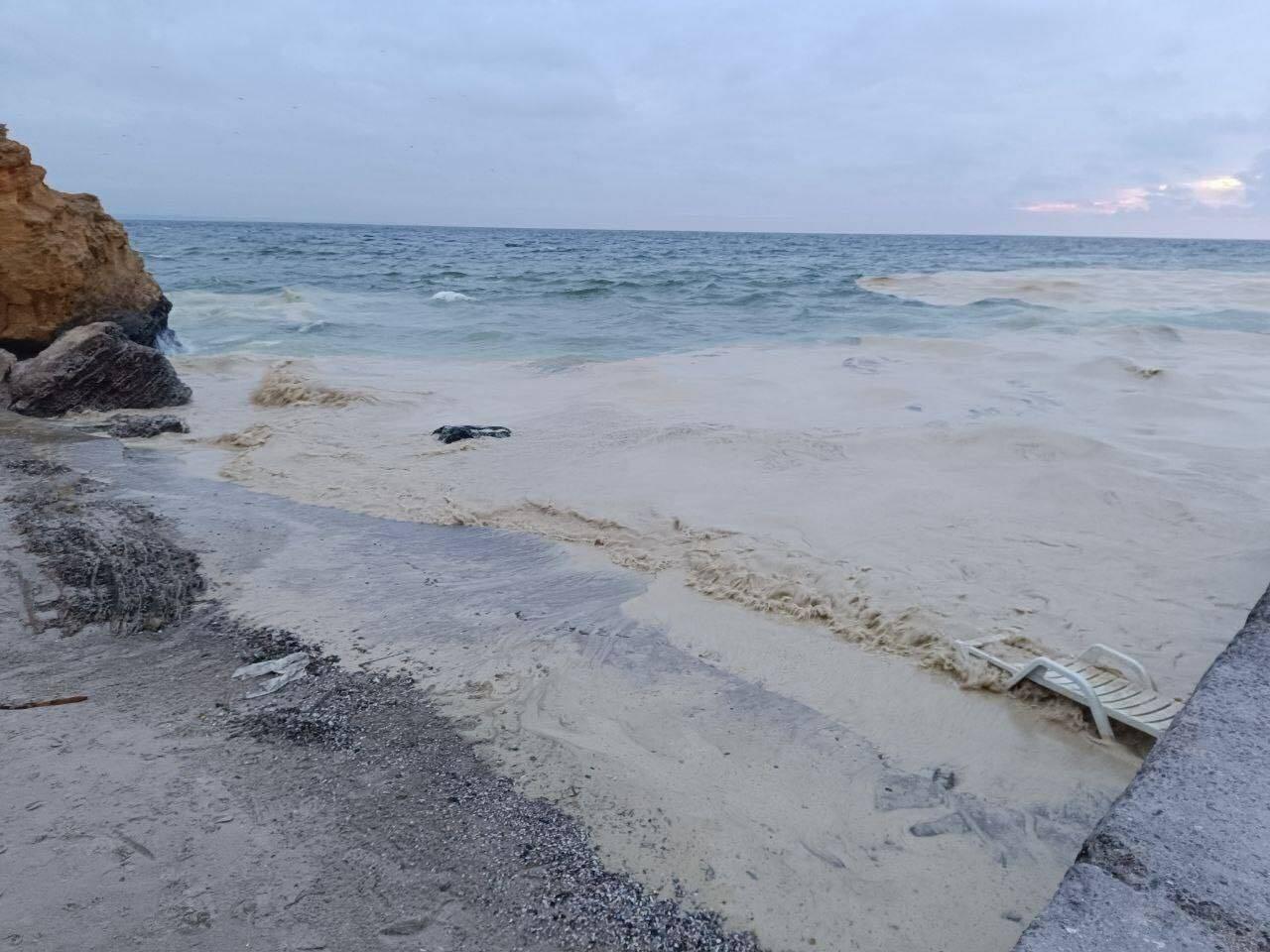
In Balynsky’s experience, some Ukrainian officials seem to simply ignore the problem. “We didn’t find out about the sunflower oil spill, the first one, from officials,” he says. “We actually saw it visibly on the beaches, and that’s how we found out.” The leader of Odessa’s military administration “acted like nothing happened,” Balynsky adds. “He said that it’s only a food product, so it doesn’t have a big impact—though he’s not an ecologist.”
Yet while officials may not always do their part, the Black Sea’s sunflower oil spills are ultimately due to Russian aggression. According to many experts, Balynsky included, Russia is guilty of ecocide. It’s not just the spilled oil, but the cumulative impacts of many intentional attacks on the ecosystem.
“Documenting and collecting evidence of Russian war crimes in all the areas, including ecology, for the animal world and for nature, is very important,” says Balynsky.
“At the end, these are the crimes which Russia as the aggressor should pay [for],” says Gozak. “This should be properly documented and fixed and submitted to the relevant courts, as crimes against the environment.”