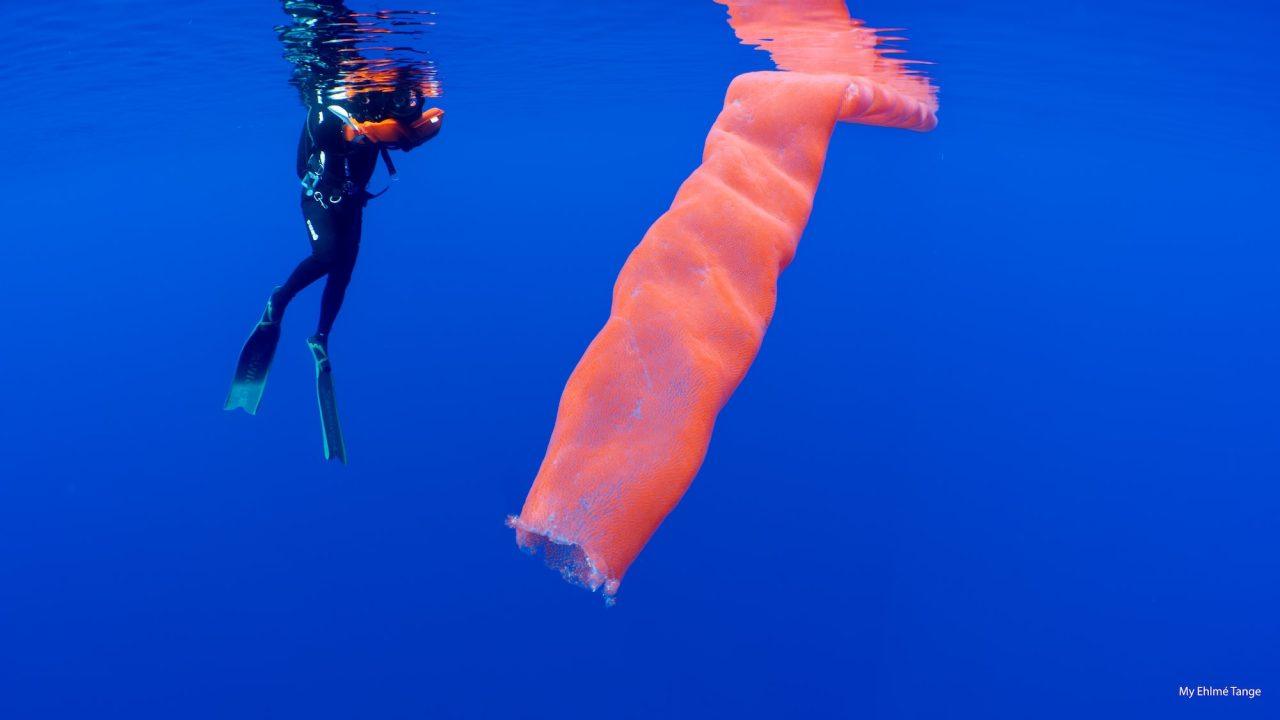
The Azores are a self-governing Portuguese enclave consisting of nine volcanic islands scattered across the Atlantic Ocean. Here, they have succeeded in creating something that very few countries have even begun to attempt: designating at least 30 per cent of the sea off their coast as marine protected areas. They have already achieved the UN’s goal of protecting 30 per cent of their sea area.
Sweden does not yet even have an action plan for how to begin this work.
And in the Azores, the positive effects of protecting the sea are already visible, including more fish in the sea.
About Deep Sea Reporter: Our ambition is to examine and report on issues related to the sea and the life that exists beneath its surface. We operate in the public interest and are independent of political, commercial, and other interests in society.
In 2022, 196 countries officially agreed to adopt the Kunming-Montreal Framework, a set of targets aimed at protecting biodiversity globally. Target 3 sets out the goal of establishing protected areas covering 30 per cent of the Earth’s inland, coastal and marine areas.
“Protected Planet” is part of the United Nations Environment Programme. Every two years, they release the Protected Planet Report, which summarises the progress of Target 3, i.e. how much of the Earth’s surface is considered protected.
On the UN Biodiversity Lab website, you can use an interactive map to see how each country is doing.
Below is an excerpt from the database from October 2025:
Sverige
15.49% of the land area and 16.05% of the marine area of Sweden is classified as a protected area according to the World Database on Protected Areas.
Finland
13.61% of the land area and 11.83% of the marine area of Finland is classified as a protected area according to the World Database on Protected Areas.
Norge
17.78% of the land area and 1.04% of the marine area of Norway is classified as a protected area according to the World Database on Protected Areas.
Danmark
16.20% of the land area and 23.54% of the marine area of Denmark is classified as a protected area according to the World Database on Protected Areas.
*The majority is Greenland
Tyskland
39.31% of the land area and 45.39% of the marine area of Germany is classified as a protected area according to the World Database on Protected Areas.
Frankrike
Data from September 2025, 28.63% of the land area and 49.76% of the marine area of France is classified as a protected area according to the World Database on Protected Areas.
Storbritannien
28.45% of the land area and 46.76% of the marine area of United Kingdom of Great Britain & Northern Ireland is classified as a protected area according to the World Database on Protected Areas.
Brasilien
30.62% of the land area and 26.65% of the marine area of Brazil is classified as a protected area according to the World Database on Protected Areas.
Indien
7.66% of the land area and 0.31% of the marine area of India is classified as a protected area according to the World Database on Protected Areas.
Australien
22.03% of the land area and 45.39% of the marine area of Australia is classified as a protected area according to the World Database on Protected Areas.
Ryssland
No data
Sydafrika
9.60% of the land area and 15.43% of the marine area of South Africa is classified as a protected area according to the World Database on Protected Areas.
Kenya
13.97% of the land area and 0.59% of the marine area of Kenya is classified as a protected area according to the World Database on Protected Areas.
USA
12.95% of the land area and 19.03% of the marine area of United States of America is classified as a protected area according to the World Database on Protected Areas.
Kina
15.56% of the land area and 4.79% of the marine area of China is classified as a protected area according to the World Database on Protected Areas.