
Edy Setyawan, PhD in manta rays, grew up in a small mountain village in Java. Today, he stands among the world’s leading researchers on manta rays and sharks. He has published a remarkable body of scientific work, co-founded an Indonesian-led NGO dedicated to elasmobranch conservation, and was the first to conclusively identify a manta ray nursery habitat in Wayag, Raja Ampat – along with multiple other potential nursery locations throughout Raja Ampat.

A Swedish company has been authorised to investigate the possibility of extracting mineral nodules from the seabed in the Gulf of Bothnia. They are said to be important for the green transition. Researchers will now provide answers to how the extraction would affect the organisms living at the bottom of the sea.

From big and scared to small and brave - evolution has moved at lightning speed on a small island in the Koster Sea on the West coast of Sweden. The beach snail's rapid adaptation after a forced change of environment amazes researchers. In 30 years, it has changed both its appearance and behavior to survive.

Fish act as a kind of guide, finding the prey and ‘pointing out’ the location to the octopus, which can use its flexible arms to catch the hidden prey.

Sometimes we remember events completely wrong when our brain creates so-called false memories. A study shows that false memories also occur in some octopuses.

NASA has identified several hundred marine dead zones around the world. A dead zone is an area in the ocean where the oxygen level is too low for marine life to survive. Some of them occur naturally, but most of them are man-made. Seven out of the world's ten largest dead zones are in the Baltic Sea. The biggest dead zone in the Baltic Sea is almost the size of Ireland.

The EU's and Sweden's marine policy has for several decades led to overfished seas. Several ocean areas are on the brink of an ecological disaster. Climate change, warming and eutrophication are the result of human activities, which are dramatically changing our oceans.

Across the world scientists and biologists are studying a huge variety of dedicated and intricate subjects: jellyfish proteins; fish intelligence and whether octopus dream. On the other side of the coin are the naturalists
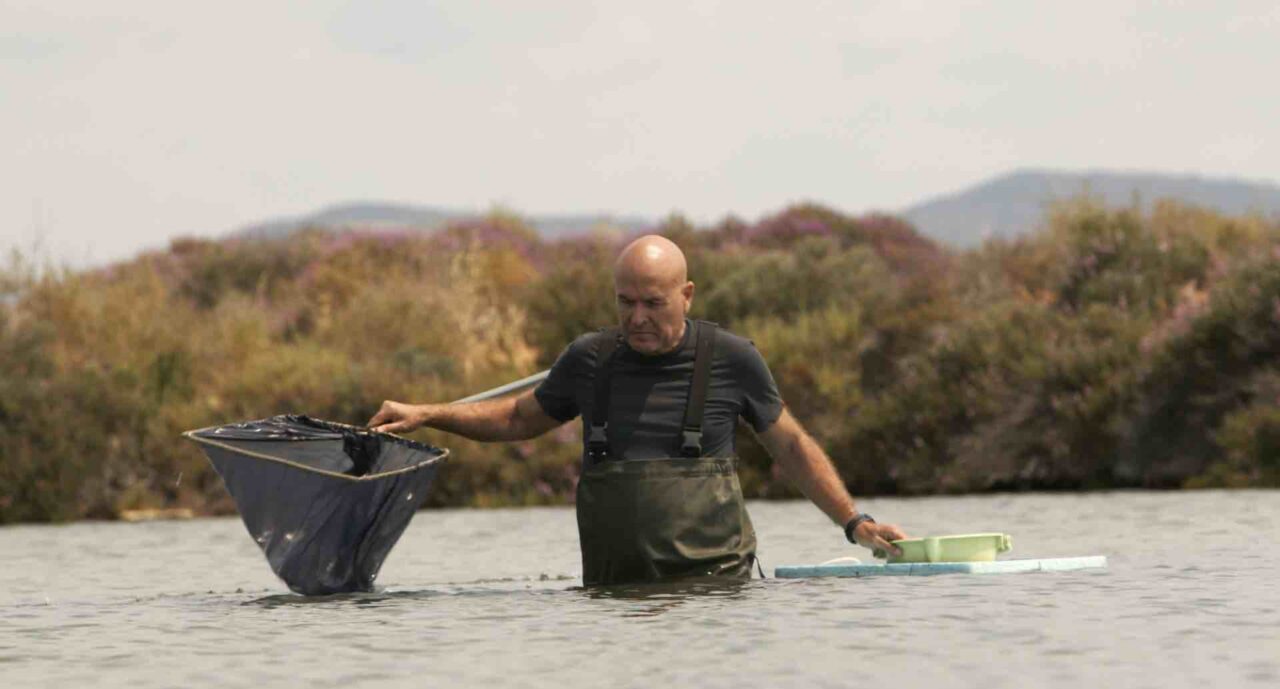
The population of seahorses in Ria Formosa in southern Portugal was probably the largest in the world. But in the mid-2010s, it collapsed, and 95% of the seahorses disappeared. Climate change, poachers, and environmental pollutants are believed to be the causes.

South Africa has an incredibly rich diversity of sharks, representing nearly a quarter of all known species, some found nowhere else on the planet.

On the rocks in Bohuslän live small, discreet shells with special properties. Snail-collecting scientists have now received clues about what is crucial for species' survival.

iSimangaliso Wetland Park in South Africa is home to one of the world's most pristine reef systems, home to hundreds of different species from rare fish to tiny seahorses...and hundreds of cleaning stations where fish come in for their daily cleaning sessions. Petro van Jaarsveld who is currently conducting her PhD studies on these fascinating stations takes us on a tour inside the surprisingly complex and beautiful world of a fish car wash...

The narwhal is a relatively small arctic toothed whale (4 - 5 meters). It is shy and typically lives in the drift ice around the northern ice cap, where it can live up to 100 years. This makes the narwhal particularly vulnerable to the severe climate changes that are taking place around the Arctic. The Inuit have traditionally hunted narwhals both for their valuable tusk, fine meat and not least, for the tasty skin.

New research should provide an answer to that question. -Historically, fish have hardly been considered animals, I think it is important to change that. If we see fish as animals, we might start to respect them more. That's what Marco Vindas says, who researches the behavior of fish, and is currently working on a world-unique project in Norway.

Planting new eelgrass in places where it had disappeared can do the trick for wildlife. About 80 percent of the invertebrates have returned in a project on the West Coast

Ida Beitnes is a Associate Professor at the NMBU. Ida has earlier studied stress as an important contributor to the development of cardiac disease in salmonids.

Marco Vindas is an Associate Professor at the Norwegian University of Life Sciences. He conducts research on the neural control of behavior and physiology in fish. He wants to understand emotional and cognitive responses of fish in response to environmental stimuli. Much of his research is focused towards increasing fish welfare and promoting sustainable exploitation of both farmed and wild fish resources.

In northern Norway, a few kilometres outside the fishing harbour of Stø in the Vesterålen archipelago, lies the small, unassuming island of Anda. Small it may be, but it boasts one of the largest lighthouses on the Norwegian coast.
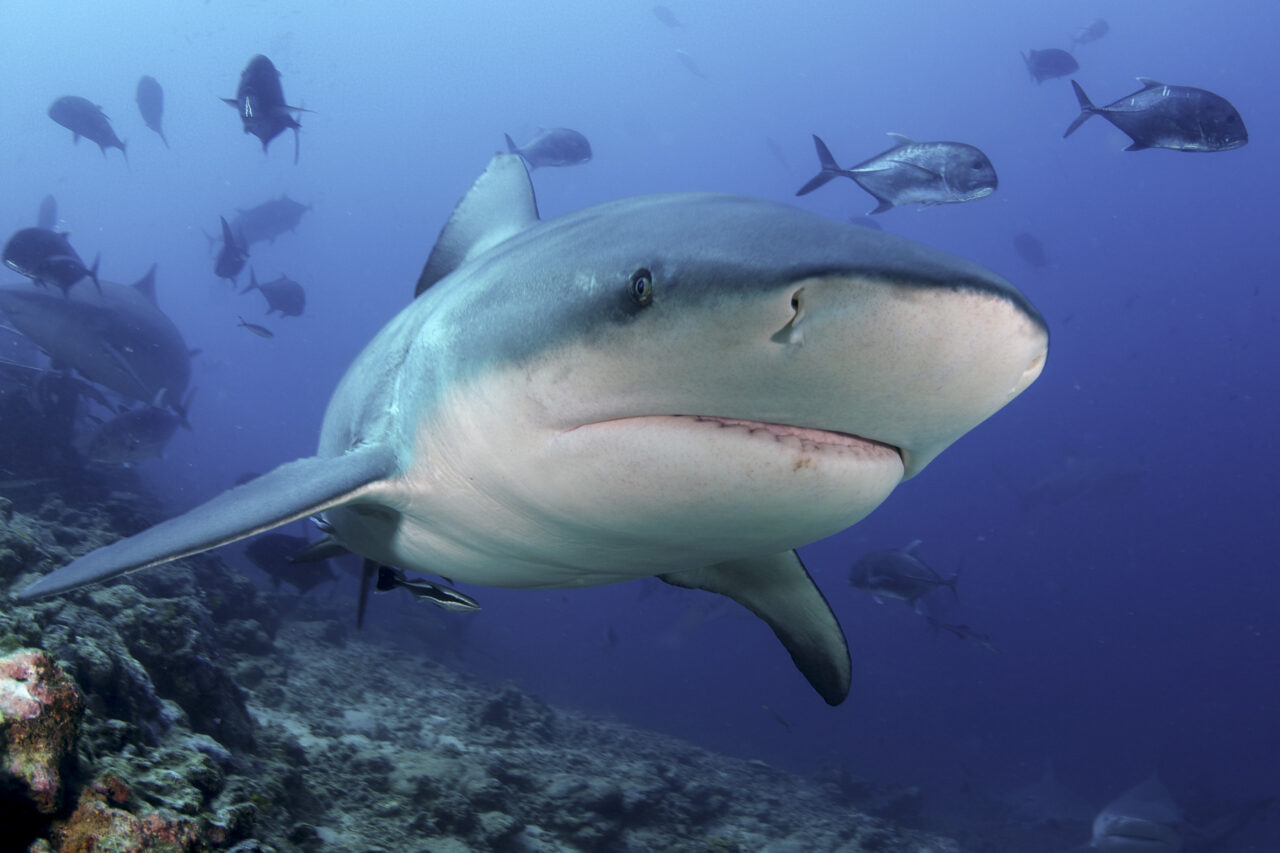
Researchers in the United States have developed a transmitter that can reveal where and when sharks give birth to their offspring, according to Vetenskapsradion.

In part two, we delve into the threats facing the small-toothed whales that inhabit Sweden's waters. Why are these porpoises becoming increasingly rare, and what steps can we take to address the issue?

Mattias Sköld is a researcher at SLU Aqua in Lysekil. He has been involved in filming the seabed in marine protected areas, including in Bratten, on behalf of the Norwegian Sea and Water Authority (HaV).

Sweden's only whale is not easy to see. In the Baltic Sea it is acutely threatened, but outside Kullaberg there is a small colony. There, scientists try to learn more about the porpoise's secret life. With the help of new technology, it can be studied both from above and below the water's surface.

The 11th of February is the UN’s International Day of Women and Girls in Science.

Tvättsvampar kan rädda mänskligheten. Säger jag till grannen som tvättar bilen. Hon bara stirrar på mig.

