Strong support for stopping fishing for fishmeal
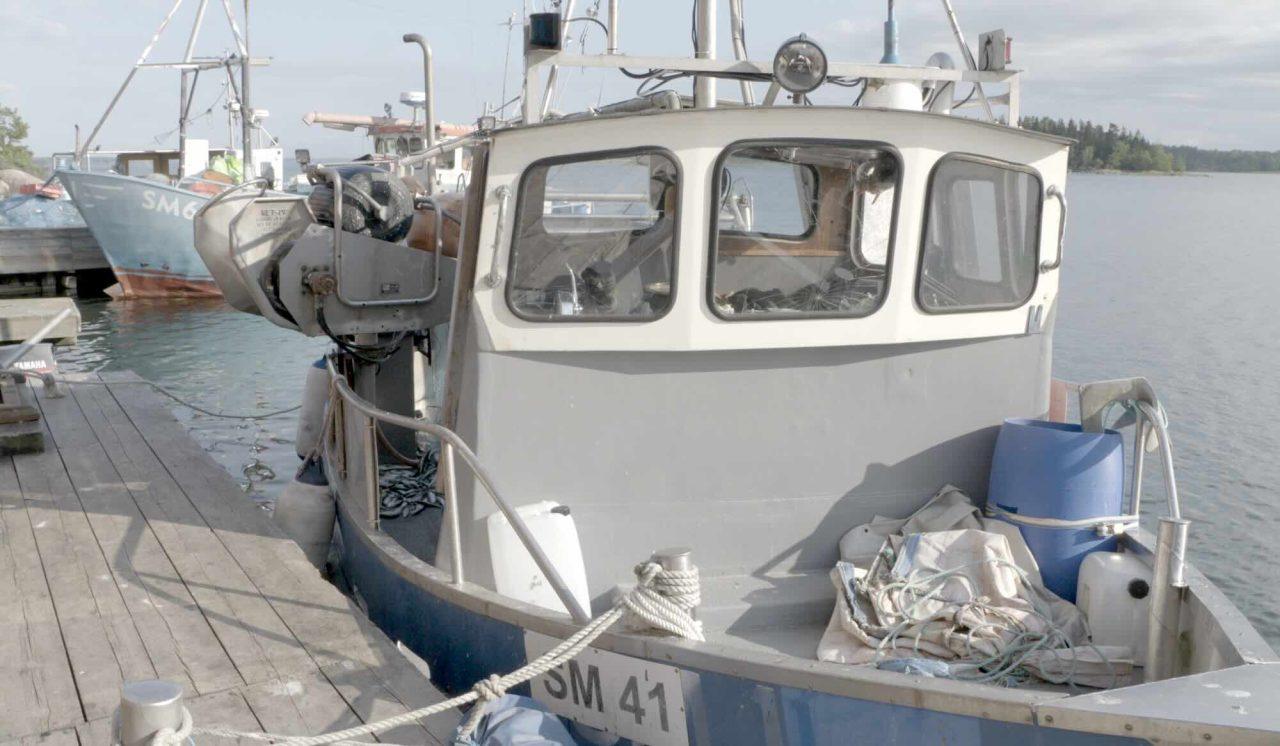
73 per cent want to ban large-scale fishing for fishmeal in the Baltic Sea. This is according to a recently published opinion poll carried out by the evaluation, and communications agency,Verian, on behalf of the Swedish Society for Nature Conservation. Just over 3,300 Swedes were asked to give their views on six different proposals relating to nature.
Text: Marika Griehsel
The results show that public opinion on several issues is significantly stronger than the positions taken by political parties.
Support is strongest for a ban on PFAS, with 81 per cent being very or fairly in favour of a ban. And 60 per cent are very or fairly in favour of strict protection of all primeval and natural forests in Sweden by 2030.
The survey also shows that many respondents want to maintain and strengthen coastal protection and increase organic farming.
´This shows that the Swedish public wants to see policies that take the nature crisis more seriously. When we ask people about specific measures, support is strong – but policy has not kept pace. Ahead of the election, the parties need to listen to voters and raise their ambitions for nature,´says Karin Lexén, Secretary-General of the Swedish Society for Nature Conservation in a presstatment.
The parties’ positions are taken from the Swedish Society for Nature Conservation’s election survey. Link: Vad lovar partierna?
The survey shows the following results:
· 73 per cent want to ban large-scale fishing for fishmeal in the Baltic Sea
Only 3 per cent are against it. Among the political parties, all except the Christian Democrats (KD) support the proposal.
Proposal: Ban large-scale fishing for fishmeal, where the catch is used for animal feed, in the Baltic Sea.
· 55 per cent want to retain and strengthen coastal protection
15 per cent are against it. At the same time, a majority in the Riksdag – the Moderates (M), the Sweden Democrats (SD), the Christian Democrats (KD) and the Centre Party (C) – reject the proposal.
Proposal: Retain general coastal protection in Sweden and strengthen protection in heavily developed areas.
Background: In 2025, general shoreline protection was abolished for small lakes and watercourses.
· 47 per cent want to increase the mineral levy on mining
15 per cent are opposed. Support is particularly strong in Norrbotten (70 per cent), Jämtland (67 per cent) and Västernorrland (53 per cent).
Proposal: Introduce an increased mineral levy (tax) to discourage new mining, strengthen circular economies and compensate local communities.
Background: Sweden’s mineral levy – a type of tax paid by mining companies – is among the lowest in the world.
· 45 per cent want more organic farming to strengthen resilience
19 per cent are against it. In the Riksdag, 88 per cent of MPs are represented by parties that oppose the proposal – M, SD, KD, L, S and C.
Proposal: Set Riksdag-mandated targets of at least 30 per cent organically farmed land and 60 per cent organic food in public consumption by 2030.
About Deep Sea Reporter: Our ambition is to examine and report on issues related to the sea and the life that exists beneath its surface. We operate in the public interest and are independent of political, commercial, and other interests in society.
Ahead of the 2026 general election, the Swedish Society for Nature Conservation commissioned Verian to carry out a nationally representative opinion poll in which 3,307 people were asked to give their views on six proposals relating to nature and the environment. Respondents were asked to rate each proposal on a scale of 1–5, where 1 means very negative and 5 means very positive towards the proposal.
The survey was conducted 27 July–11 August 2026. The results are presented for the whole country as well as broken down by, amongst other things, county and party affiliation.