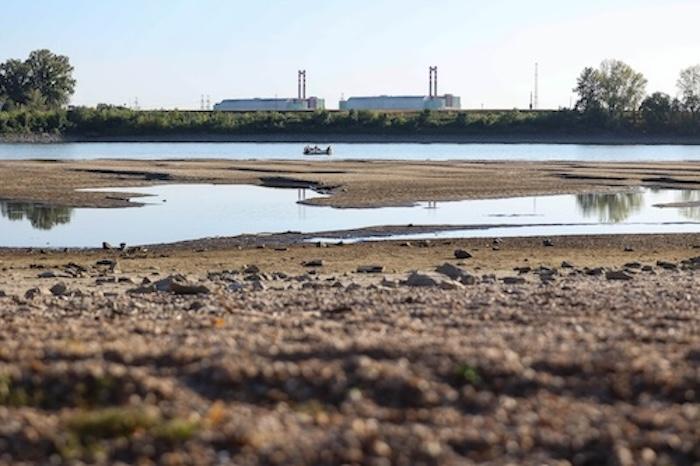
Less fresh water on Earth: ´We’re draining our savings account´
The Earth’s water system is out of balance. Freshwater reserves are dwindling and most rivers have not flowed normally over the past seven years, according to a new UN report. ´The main message is that water availability has declined in recent years,´says SMHI hydrologist Yeshewatesfa Hundecha.
Climate change is affecting the planet’s hydrological cycles – in other words, the water cycle. Some parts of this cycle are rapid – the amount of rainfall and moisture in the soil can change due to weather conditions over the course of days or weeks. Other parts, such as the melting of polar ice and glaciers, change over decades.
What the report from the World Meteorological Organisation (WMO) concludes is that both the rapid and slow-moving systems are becoming increasingly chaotic.
´It’s a reasonable pattern. It doesn’t affect everywhere equally. But certain parts of the world have been affected much more than others,´ says researcher Yeshewatesfa Hundecha.
´Draining the savings account´
WMO Director-General Celeste Saulo likens the slow components of the system to a sort of buffer, which prevents water shortages from occurring as soon as it stops raining for a few weeks.
“But we are draining that savings account. Global groundwater reserves have been on a downward trend since 2014–2016 – a persistent, decade-long signal,” she says in a press release.
It is therefore freshwater – the water primarily used by humans and animals for drinking and irrigation – that has declined over the past ten years. In Somalia, nearly half a million people were forced to flee as a result of last year’s drought, and overall, harvests are at risk of declining.
According to Hundecha, this is not just about climate change, but also about humans overexploiting underground reserves.
More extreme weather
These accelerating changes are evident, amongst other things, in more extreme weather. Either it rains too much – leading to flooding and landslides – or too little. River systems have been out of balance for the past seven years. Either there has been more water than normal in their catchment areas, or less.
´If climate change continues in a similar vein, water availability will become highly variable. One year it may be extremely wet and the next it may be extremely dry. The continuous supply of water will become uncertain,´ says Yeshewatesfa Hundecha.