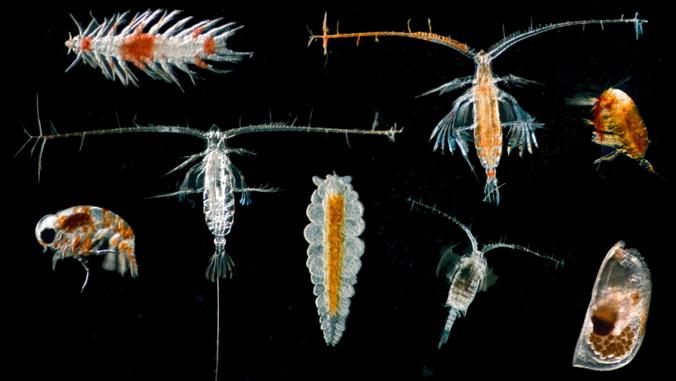
Deep-sea ´forensic scientists´ make important discoveries using new DNA technology
In recent years, biologist Annette Govindarajan has been exploring life in the deep sea using autonomous robots and environmental DNA. The goals are to reveal who lives at these depths – and where.
Roughly 200 meters below the ocean’s surface lies a region known as the twilight zone. Almost no sunlight reaches there, and what little does penetrate is insufficient for photosynthesis. The fish that live there don’t look like the ones we’re used to seeing closer to the surface. They are small, often bioluminescent, and can have both unusually large eyes and mouths lined with rows of sharp teeth.
´They’re the kind of fish that look like little monsters,’ says biologist Annette Govindarajan of the Woods Hole Oceanographic Institution in the United States.
She has devoted several years to studying the animals of this dim universe. Because this part of the ocean isn’t just dark and inaccessible — our knowledge of life in the twilight zone, which extends down to a depth of 1,000 meters, is also very limited. Even though that’s where a large part of ocean life resides.
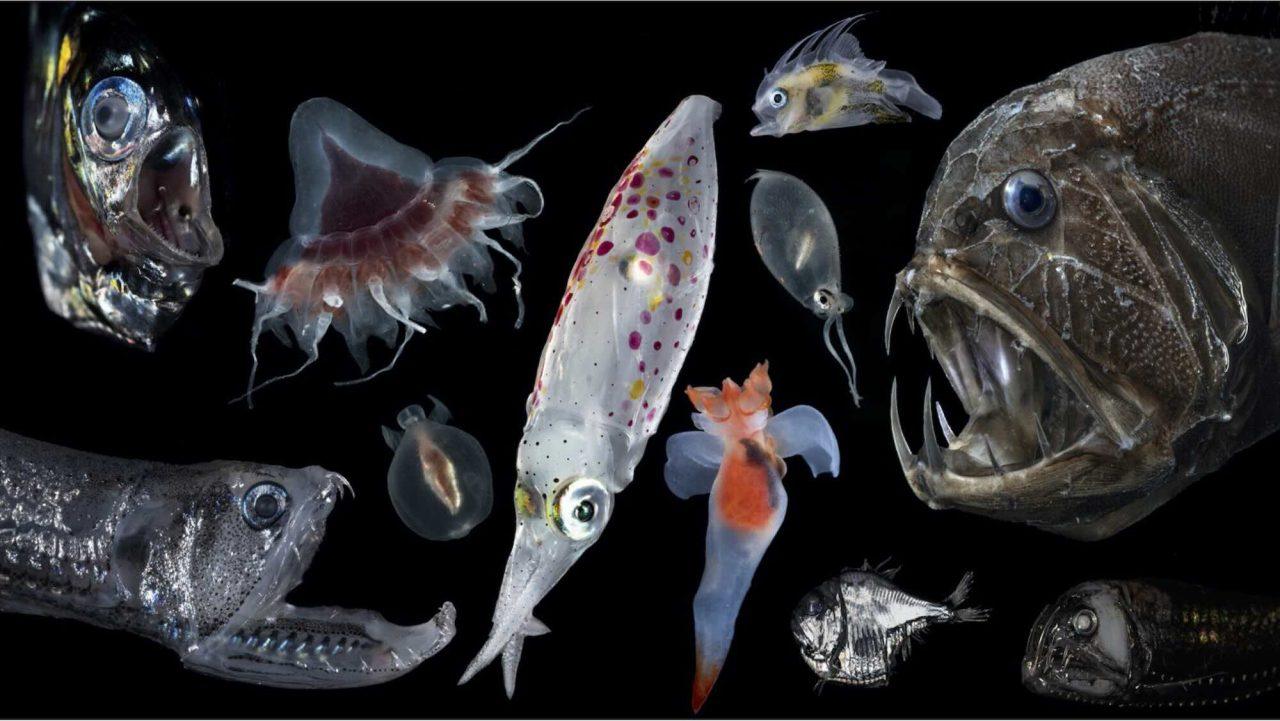
Mesopelagic animals living in the twilight zone.
The animals’ movement patterns are important to understand
One thing that we do know is that many animals in the twilight zone move toward the surface at night. Under cover of darkness, they can feed on plankton without being eaten by predatory fish that rely on daylight to hunt. When the sun rises again, they move back down into the depths. This migration happens every single day across the entire world’s oceans, and constitutes the largest migration on the planet.
This is the migration that Annette Govindarajan is working to understand. She believes this is needed both to deepen our understanding of the ecosystem itself, but also in relation to the global carbon cycle.
‘One important function this migration actually has is that it helps regulate our climate,’ she explains.
Mitigating climate warming
By feeding on plankton near the surface and then swimming back down into deeper water, the diel migration helps to draw dawn carbon originating from the atmosphere down into the deep sea. That’s because plankton incorporate carbon in their bodies, and when it’s transported down into the deep sea, it is removed from the system for a long time. Without this process, known as the biological pump, the warming of the planet would likely happen considerably faster.
‘Therefore, if we’re interested in the rate at which carbon is moving downwards, it’s important to understand how that’s happening and who’s doing it,’ says Annette Govindarajan.
A mysterious discovery
The fact that this large-scale migration in the ocean takes place was discovered using sound during the Second World War. It was the US Navy’s sonar that picked up something mysterious — a false ocean floor that only appeared at certain times of day, which would later turn out to be the vast number of animals traveling up and down through the depths.
When researchers today try to map the animals’ movements, sound is still what they use. Backscatter from sound waves can indicate the depth where animal biomass is concentrated. What they can’t reveal, however, is the species of animals that are making up the observed acoustic signal, or echoes. That’s an important missing piece of the puzzle — one that Annette Govindarajan wants to find, using environmental DNA (e-DNA).
When she and her fellow researchers at the Woods Hole Oceanographic Institution began using the technology in the twilight zone 2018, there were few published studies using e-DNA in the deep sea. That’s no longer the case today.
‘We’ve helped lead the way in this field, and people are increasingly realizing how much we can learn from it. Environmental DNA applications are really growing fast, and we need the right tools and technology to be able to use it effectively,’ says Annette Govindarajan.
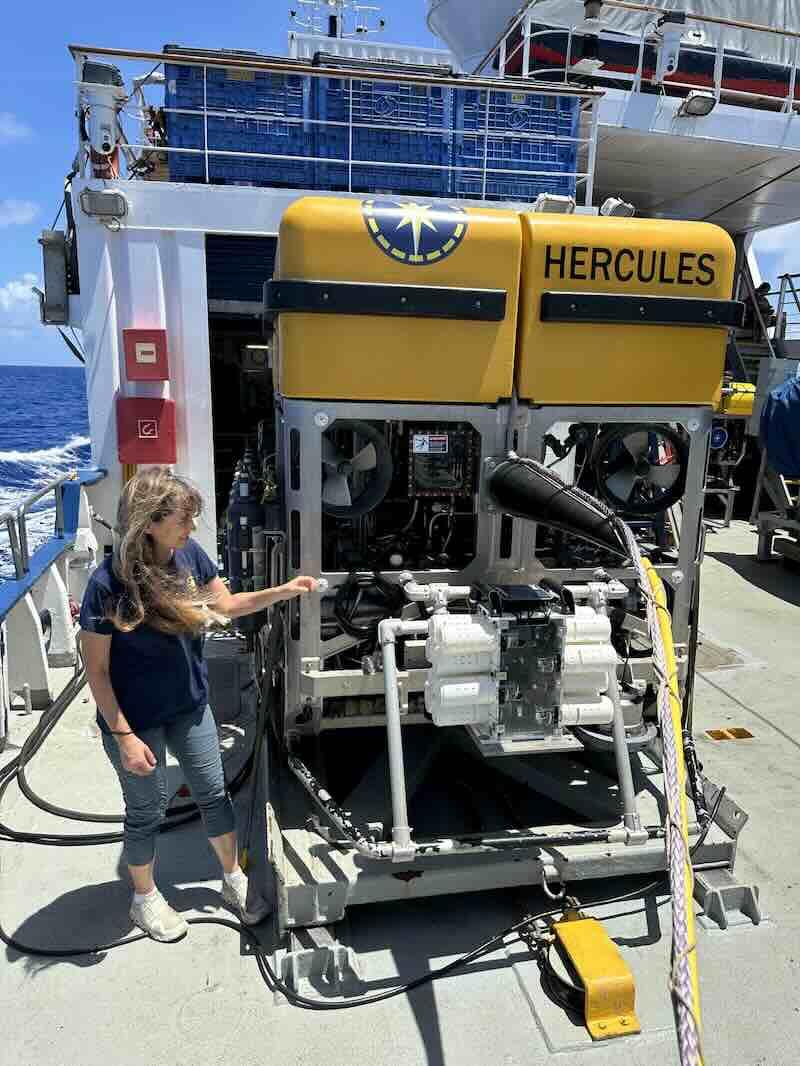
Photo: Ocean Exploration Trust/NOAA
Forensic work at sea
Environmental DNA is, put simply, the genetic signatures of life in the ocean. For animals, it can be fish scales, cells, or fragments of tissue — any kind of tiny particle that can leave a telling trace.
‘To capture e-DNA, what you do is filter the water, and the filter will contain all the little genetic signatures from animals who have been in the sampling location recently,’ explains Annette Govindarajan.
It’s like the opening scene of any crime drama, when a crime scene gets cordoned off and the forensic team is called in. Sometimes they find a forgotten cigarette butt or some kind of fiber that ultimately leads to the killer being exposed. But in those cases, the cordoned-off area is rarely bigger than an apartment or a patch of forest. For Annette and her fellow researchers, the area is considerably larger. They’re looking for traces of DNA to identify animals that have been moving through the largest and least explored place on Earth — the deep sea.
New technology to scale up sampling
The first time Annette Govindarajan set out to collect environmental DNA in the twilight zone, she faced several challenges. The containers they used to fill with water samples – called Niskin bottles – were relatively small and too few in number, and she noticed that the deeper the samples were taken, the less DNA was captured in the filters.
‘So what I realized was that we needed a better approach. Because deep sea sampling has different needs compared to sampling in a river or along the coast,’ she explains.
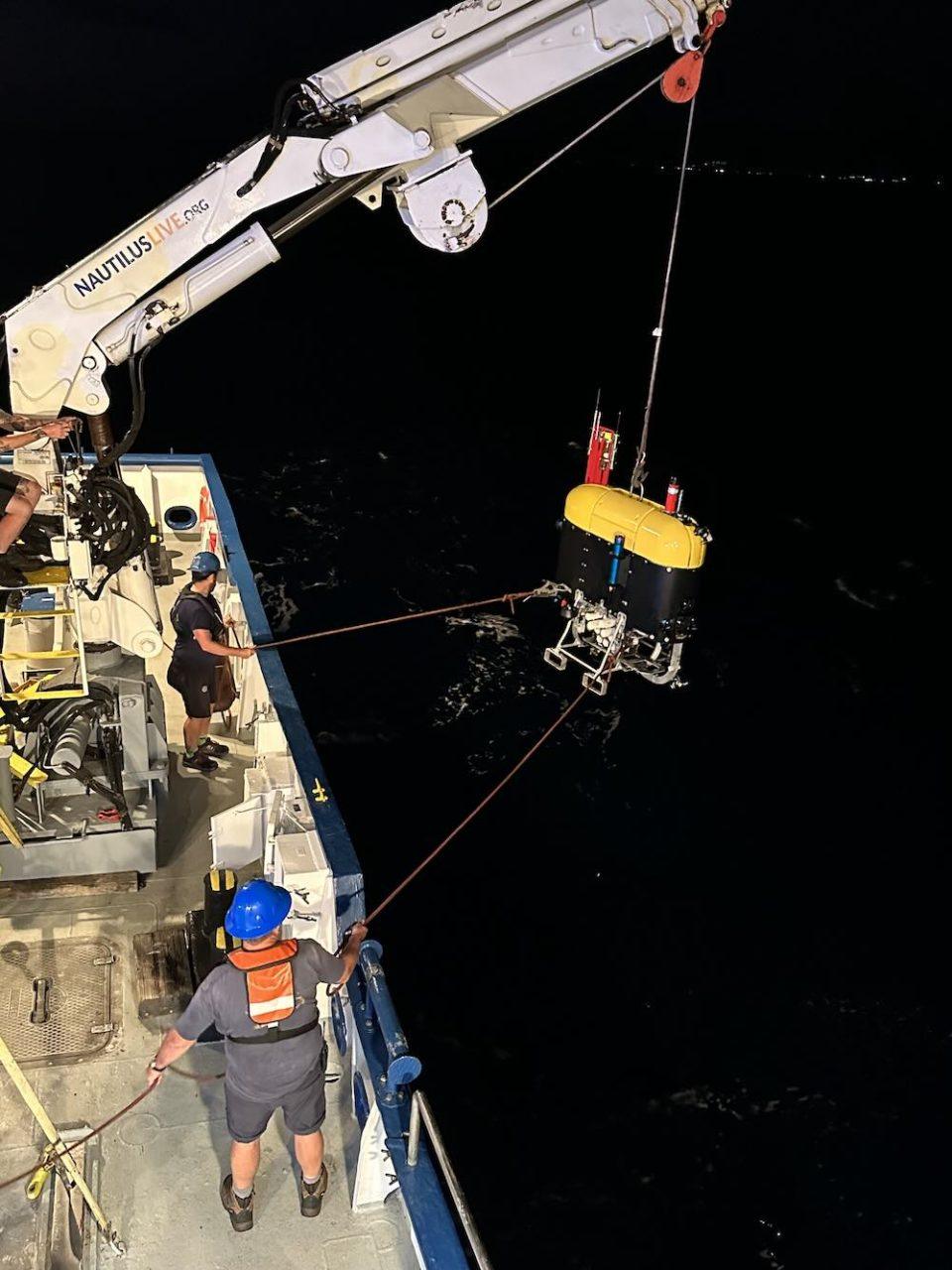
Photo: Nina Yang, WHOI
Since then, she has worked on new technical solutions to address these challenges. She collaborated with engineers to develop an autonomous sampler that can filter large volumes of water on site, without bringing it to the surface. Other projects use the autonomous underwater robot Mesobot, which, among other things, can follow individual animals and communicate with other robots to direct it where to sample.
By combining acoustic signals that reveal where deep-sea animals are located with the collection of environmental DNA that reveals who is present there, the robot can map biodiversity and the details of the daily migration in a more efficient way.
‘Environmental DNA is a powerful new approach to add to our deep sea toolbox. One that will provide important new insights into the biodiversity and ecosystem roles of deep midwater animals,’ says Annette Govindarajan.
Cover image: Marley Parker/Ocean Exploration Trust/NOAA
About Deep Sea Reporter: Our ambition is to examine and report on issues related to the sea and the life that exists beneath its surface. We operate in the public interest and are independent of political, commercial, and other interests in society.