Chronicle: End of the Year
When I try to sum up the past year, I see how our reporting has spread in many different directions. From climate to overfishing, from ‘beautiful pictures’ to intelligent fish and dead seals on Swedish beaches. One might think that we should have focused more, or one might choose to see that we have succeeded in covering a range of issues that all concern the sea. Our most important hub – the foundation of all life.
Chronicle: Lena Scherman
Perhaps there has been a certain emphasis on climate issues, because it is not only above ground that we are causing problems for ourselves; it is also happening at an alarming rate below the surface. It is easy to lose heart. Not least because of the massive overfishing that affects everything from the climate and biodiversity to our food supply.
As I’m thinking about this, my husband comes by and shares his thoughts. ‘If you’re going to write about the year,’ he says, ‘you have to include at least two pieces of positive news, otherwise people won’t bother reading it.’
Yes, yes, I hear what he’s saying, but at first it’s gloomy – because the consequences of us emptying our seas of fish are so extensive that they are difficult to grasp.
In an ever-faster downward spiral, we are fishing our way further and further down the food chain. And when the sea is emptied, the conditions for life on land will no longer exist.
It is bleak, to say the least.
But then I actually come up with some positive news. After more than 50 years, bluefin tuna are now back in Swedish waters. Strict controls on illegal fishing in the Mediterranean and tough fishing quotas have proven to be a recipe for success.
In the Baltic Sea, however, the situation remains bleak. What can we poor northerners do about the monster trawlers off Peru and West Africa when we can’t even stop overfishing in the Baltic Sea?
PM Nilsson, former State Secretary to Prime Minister Ulf Kristersson, who was caught poaching eels in Blekinge and now a CEO of Timbro, wrote a column in Dagens Industri this summer about the large-spined stickleback that is taking over the Baltic Sea.
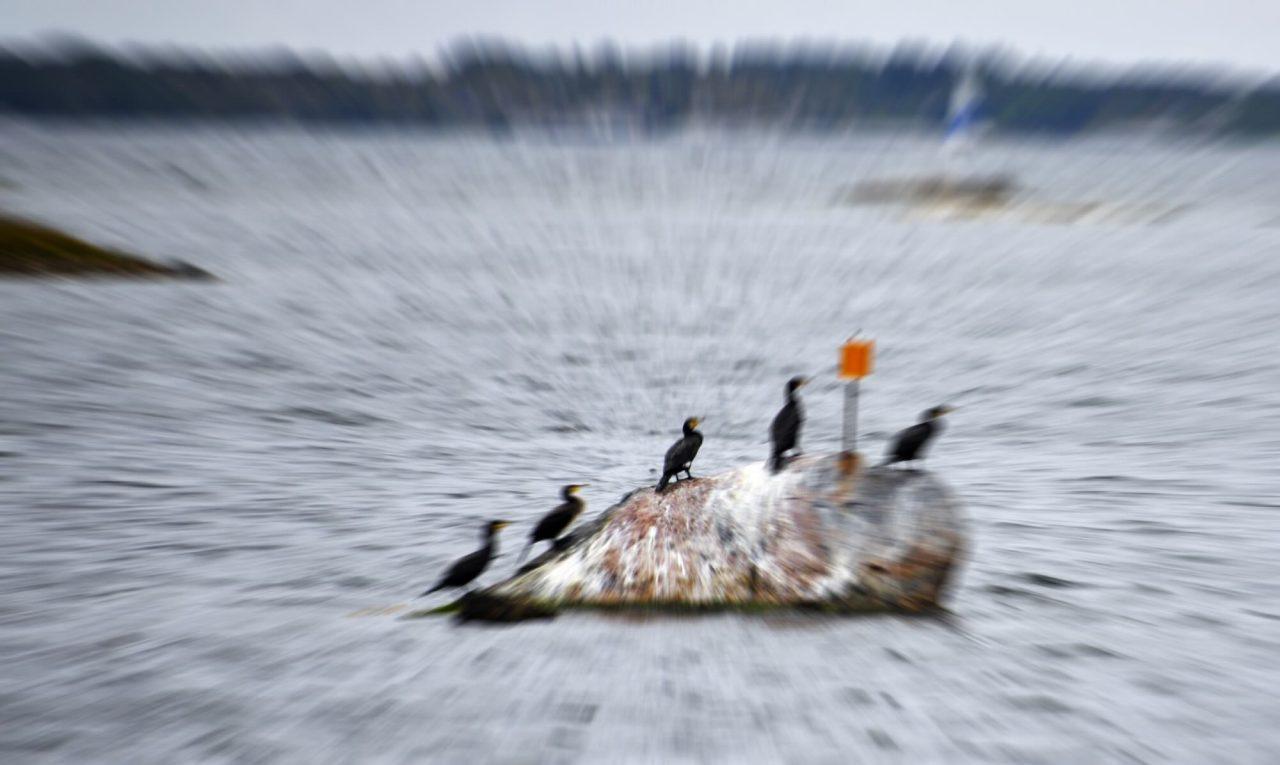
In the column, he mentions the industrial trawlers with huge catches that go to Denmark and become animal feed for salmon and pets. But the solution to the problem of overfishing and fish for fishmeal, as PM Nilsson sees it, is (and here’s a need of a little drum roll) – to shoot seals and get rid of cormorants (which, according to PM Nilsson, also smell bad).
There is much to be said about the grey seal, which is the dominant species in the Baltic Sea, and about the cormorant. Both are opportunists, for example, eating whatever is available, and both are extremely mobile creatures that can easily travel from the northern shores of Poland to the Stockholm archipelago or, for that matter, to the Gulf of Riga in search of food.
Shooting a female seal in the outer archipelago of Stockholm will not save any herring populations. On the contrary, as everyone knows, top predators such as seals, cod and pike help to keep nature in balance.
Look at the Sea of Åland, where perhaps the last large cod stocks in the Baltic Sea live and thrive side by side with one of the Baltic Sea’s largest seal populations. And in the stomachs of cormorants from Kalmarsund, researchers from SLU find almost nothing but sticklebacks.
Could it be that cormorants are actually the solution to the stickleback invasion?
But the hatred of seals and cormorants in Sweden is almost as great as the hatred of wolves. Perhaps they are just more vocal in the debate, because when I skim through last year’s articles on overfishing, very few mention seals and cormorants as a problem.
Nevertheless, the ‘loud voices’ have got our Minister for Fisheries and Rural Affairs, Peter Kullgren (Kd), to listen, and people with an interest in hunting at the Swedish Environmental Protection Agency have the power to decide that we must continue with licensed hunting of seals and protective hunting of cormorants.
If it is biodiversity we are after, it will not be restored by shooting top predators. We need to kill fewer, not more, wild animals if our ecosystems are to have a chance to recover!
This actually leads to the second piece of good news this year: that the Azores have made 30% of their surrounding waters a marine protected area. It is the largest in the North Atlantic and one of the first to achieve the UN’s goal of protecting 30% of all oceans by 2030. And science has already shown that fish are now returning.
That’s huge! Time to set off a New Year’s rocket!
This is a chronicle; opinions and reflections are those of the writer.
Deep Sea Reporters’ journalism is based on objectivity and impartiality. However, we may take a stand to defend human rights and all marine life, because a healthy sea is not a luxury – it is a human right.