CHRONICLE: A Good Laugh
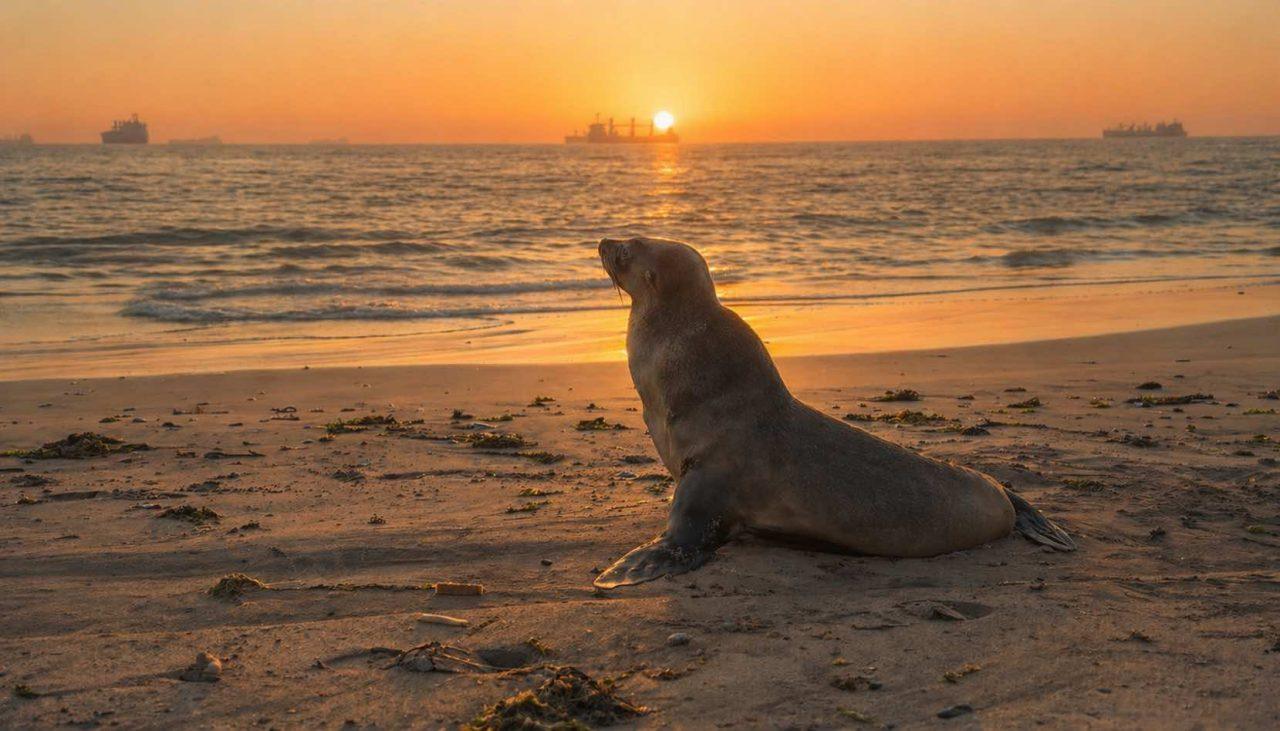
One hundred thousand seals lie lazily along the shores of Pelican Point — a sandspit stretching out into the ocean just outside Walvis Bay in Namibia.
A jackal prowls along the edge of the seal colony, waiting for an unattended pup, to grab a meal.
Charles, the wildlife guide on our boat, tells us about the life of the Cape fur seal, which doesn’t seem very different from that of grey seals in the Baltic Sea.
Text and Photo: Daniel Batist Hager
The seals eat what they can catch in the ocean, mate once a year, and give birth to their pups a year later.
But life starts out tough. Twenty percent of the pups die. Much of this is due to reduced access to food. Hunting trips, which can now stretch up to 100 kilometers, exhaust the pups. Many fail to make it back and instead wash ashore around Walvis Bay, drained of energy — likely to the great delight of the jackals.
A little further away, cormorants sit on a pier, drying their wings in the wind. Every now and then, they detach and glide effortlessly over the wave tops. I ask about fishing and trawlers. Charles nods and says that overfishing is a serious problem for both people and animals.
Our conversation is interrupted by the commotion of a pair of dolphins passing by the boat. It turns out to be a shy little dolphin — Heaviside’s dolphin — an endemic species found only here.
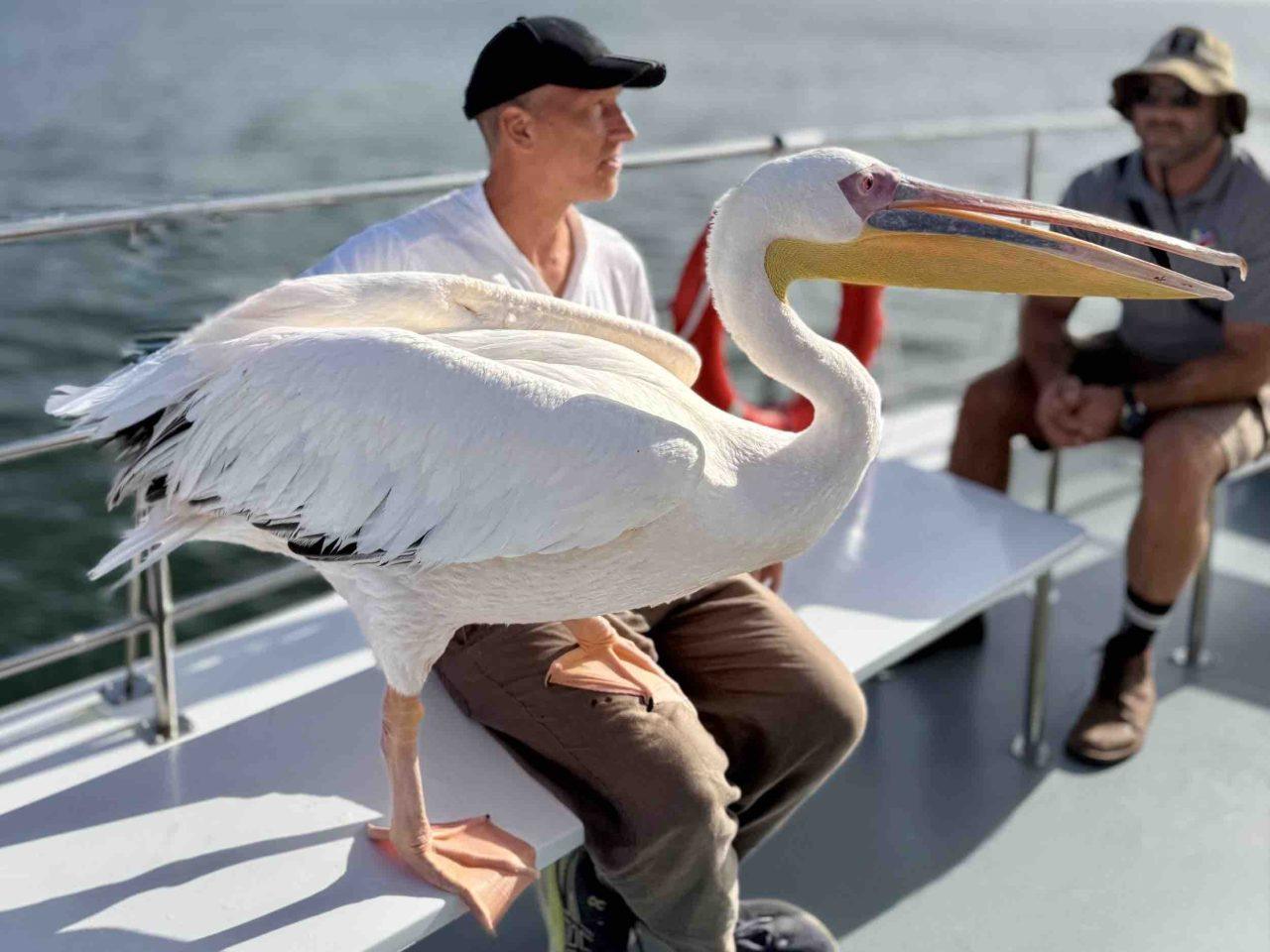
A pelican lands on the railing. Its wingspan measures over three meters.
“Watch out for the wings. Graceful in the air, clumsy on land,” Charles says with a twinkle in his eye.
The noise from the seal colony is overwhelming. Male seals are fighting. There are almost twice as many seals on this narrow stretch of land as in the entire Baltic Sea.
“In Sweden, many people blame the lack of fish in the sea on seals and cormorants,” I say.
Charles goes quiet.
“You’re joking, right?” he says.
“No,” I reply.
He bursts out laughing.
“That’s the funniest thing I’ve heard,” he says, calming down a little.
“Humans are the only creatures disrupting the ecosystem here. Trawling is a big part of it. Boat traffic and dredging are another. Dolphins are sensitive to the noise — they’ve become fewer here in Walvis Bay. But seals eating all the fish? Haha! If the fish disappear, the seals will too. That’s how an ecosystem works. Simple.”
We turn back toward the harbor, circling large oil tankers and cargo ships anchored while waiting for supplies.
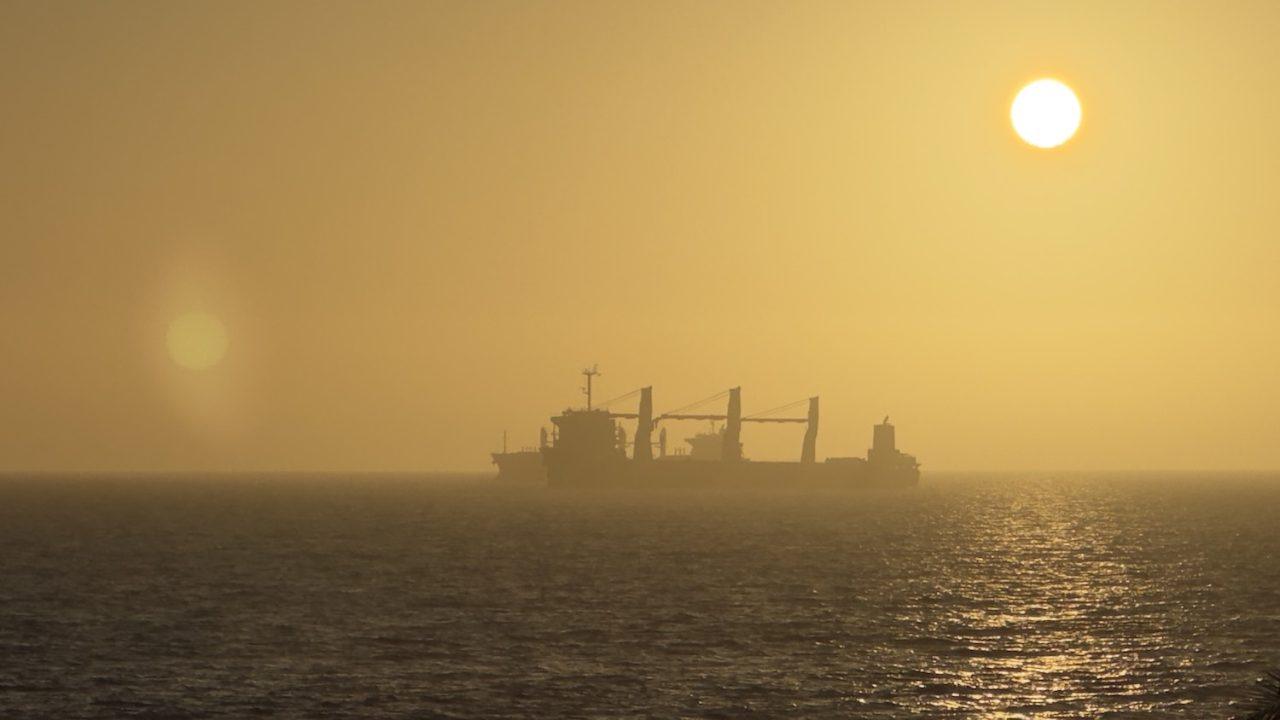
“A result of Trump’s war in Iran,” says Charles.
When ships can’t pass through the strait in Iran, they have to go around Africa. This is the only harbor large enough to receive them, apart from Cape Town.
Now oil has been discovered in Namibia, and the port of Walvis Bay is set to be dredged deeper and expanded. How humans will affect the lives of seals, cormorants, jackals, dolphins, and pelicans remains to be seen.
I finally ask about rabies in seals (something Deep Sea Reporter previously reported on in Cape Town, South Africa). One theory is that rabies comes from jackals and other wild dogs in Namibia.
“We’ve had one case. Nothing more.”
It is certainly frightening, but there are greater dangers threatening both humans and the natural world we are part of, he says — while handing me a freshly caught oyster from the largest farm in Africa, which we are just passing.
“I’ve never eaten an oyster,” I say, declining.
“I eat several every day,” he replies, slurping it down without hesitation.
As we approach the harbor, a seal suddenly jumps onto the boat.
“That’s Booster. A seal we rescued from fishing nets when it was young. Now he likes to jump onto boats to get a fish or two,” Charles explains.
“Take your chance — 200 kilos of cuddly seal!”
Namibia is one of the most sparsely populated countries in the world, with rich wildlife. Slightly more than twice the size of Sweden, with about 3 million inhabitants. It features savannah, jungle, vast deserts, and ocean. Nature and conservation are highly valued and are written into the constitution.
Pelican Point: https://maps.app.goo.gl/DNWpocNsMmD3FSMY8
The Cape fur seal lives along the coasts of southern Africa and is known for its large, dense colonies on rocks and beaches.
Scientific name: *Arctocephalus pusillu
Family: Eared seals (Otariidae)
Distribution: Coasts from Angola to South Africa
Appearance: Robust body with dark grey to brown fur
Diet: Mainly pelagic fish, but also squid, crustaceans, and lobster
Diving ability: Can dive deeper than 200 meters but usually hunts in shallower waters
Natural predators: Great white shark