Fish behavior, toxic algae, and the role of the sea in climate. These are some of the topics that marine research can address. Diverse subjects, but with a common goal: to better understand what happens beneath the surface.
The oceans cover more than 70 percent of the Earth’s surface. Despite this, we know less about what happens in the ocean than in space. Marine research is about trying to fill these knowledge gaps. Increasing the fundamental knowledge about the ocean without directly pointing to any application is usually called basic research. But sometimes, basic research sparks thoughts on how the knowledge could be applied in society. Then, basic research becomes the foundation for so-called applied research that aims to solve a problem with direct benefits for society. Since the connection between humans and the sea is so significant, it is not uncommon for research projects to shift between basic and applied research.
The oceans are studied by a multitude of researchers in physics, chemistry, biology, and geology. All these subjects can be linked to oceanography, which is the study of the movements and properties of the sea. This is usually done through observations from expeditions, satellites, and the creation of models. Understanding the movement of water is crucial because it affects the climate worldwide.
Many oceanographers work on environmental, energy, and climate issues in government or the private sector. As an oceanographer, one can also engage in research. Oceanography is a science with a broad spectrum of topics such as ecosystem dynamics, ocean currents, and the flow of various substances in the sea. One who has dedicated her life to the sea is the oceanographer Sylvia Earle, who has become one of the internationally known forces for protecting and restoring the world’s oceans.
Oceanography differs from marine biology because it does not always involve studying what lives in the sea. A marine biologist focuses on living organisms in all parts of the ocean and seeks to understand dynamic interactions on different scales, from a specific location to global.
To understand the complexity of the ocean, oceanographers and marine biologists often combine several fields such as biology and chemistry. Weighing in multiple disciplines is particularly important today to create a comprehensive picture that can contribute to the efforts against climate change, pollution, and other factors threatening the oceans and marine life.
Since many places in the ocean are relatively inaccessible to researchers, technological measuring aids are often used today to study these areas. They can remain in the sea and keep measuring the water’s characteristics around the clock. This makes it easier to obtain more measurement values than if researchers had to travel to the measurement site for each reading.
Oceanographic measurement stations at sea are sometimes called ocean observatories where relevant data is collected for researchers. This can include temperature, salinity, and oxygen levels, as well as wind and waves. The Voice of the Ocean (VOTO) Foundation, for example, works to facilitate data collection for researchers. The team working on research and data collection at VOTO consists of oceanographic technicians and researchers. They use so-called gliders to collect data from five locations along the coast of Sweden, and this information can be closely followed through their observation portal.

Bowhead whales dive in synchronization despite distances of up to 100 kilometers between them, according to a study by Danish, Greenlandic and Japanese researchers. This shows that the whales use an advanced form of acoustic communication, according to Danish researcher Jonas Teilmann, professor at Aarhus University. “It involves hundreds of dives over a week that […]

Sometimes we remember events completely wrong when our brain creates so-called false memories. A study shows that false memories also occur in some octopuses.

Every year we're seeing more and more turtle stranding partially because of an increase in awareness but also because there are more extreme weather events, there are more storms there are more extreme temperature changes and strong winds probably a consequence of changing weather systems, more extreme weather systems that are indicative of climate change and all of those things for us lead to increase strandings.

Marine Biologist, Dr Tessa Hempson and film-maker, Grant Brokensha, were part of a recent Manta Ray tagging expedition off the South African coast. Mantas have an incredible 20 million years of evolution behind them, and we are just beginning to uncover their secrets and appreciate their remarkable intelligence. Both from personal observations and scientific research, there is compelling evidence that these creatures that have an unusually large brain in proportion to their size, are in fact highly intelligent beings

Just as all life on land, life in the sea depends on oxygen. But for the oxygen to penetrate to the depths, the gas must be able to mix through the layers of sea water. Groundbreaking British research shows that summer storms are important for keeping the ocean healthy. And wind power has a positive effect, shows the study, published in Nature Communications.

When we talk about climate change, it is usually about warming the atmosphere and changing weather systems, but the oceans are also affected and perhaps even worse.

Fish behavior, toxic algae, and the role of the sea in climate. These are some of the topics that marine research can address. Diverse subjects, but with a common goal: to better understand what happens beneath the surface.

Underwater noise from the planned large wind turbines risks affecting both wildlife and Sweden's defense capabilities. Now researchers will find out how such wind farms will sound below the surface.

The unmanned underwater vehicle Ran has disappeared under a glacier in Antarctica. "It's a bit like looking for a needle in a haystack, but without even knowing where the haystack is," says Anna Wåhlin, project manager and professor at Gothenburg University, in a press release.

They are extraordinary biodiversity hotspots. They absorb large amounts of CO2 and release oxygen. They fix nitrogen and detoxify the water. They are nurseries for fish and hundreds of marine organisms. But they are disappearing globally and one-third of the Earth’s coastline is affected.
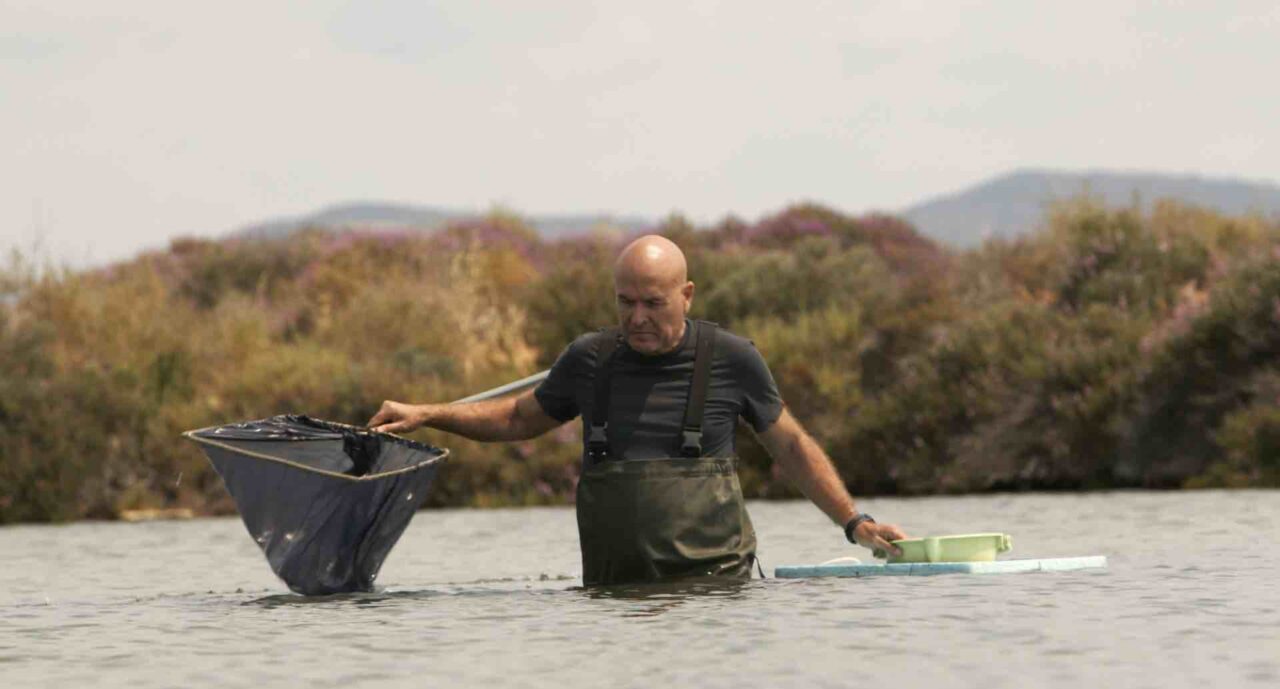
The population of seahorses in Ria Formosa in southern Portugal was probably the largest in the world. But in the mid-2010s, it collapsed, and 95% of the seahorses disappeared. Climate change, poachers, and environmental pollutants are believed to be the causes.

South Africa has an incredibly rich diversity of sharks, representing nearly a quarter of all known species, some found nowhere else on the planet.

iSimangaliso Wetland Park in South Africa is home to one of the world's most pristine reef systems, home to hundreds of different species from rare fish to tiny seahorses...and hundreds of cleaning stations where fish come in for their daily cleaning sessions. Petro van Jaarsveld who is currently conducting her PhD studies on these fascinating stations takes us on a tour inside the surprisingly complex and beautiful world of a fish car wash...

If you are surrounded by predators, it is dangerous to sleep, but the elephant seals have found their own fascinating solution. They dive down towards safer depths, allow themselves to let go of control for a little while – and sing sleep in a dreamy spiral down towards the bottom.

Ida Beitnes is a Associate Professor at the NMBU. Ida has earlier studied stress as an important contributor to the development of cardiac disease in salmonids.

Marco Vindas is an Associate Professor at the Norwegian University of Life Sciences. He conducts research on the neural control of behavior and physiology in fish. He wants to understand emotional and cognitive responses of fish in response to environmental stimuli. Much of his research is focused towards increasing fish welfare and promoting sustainable exploitation of both farmed and wild fish resources.
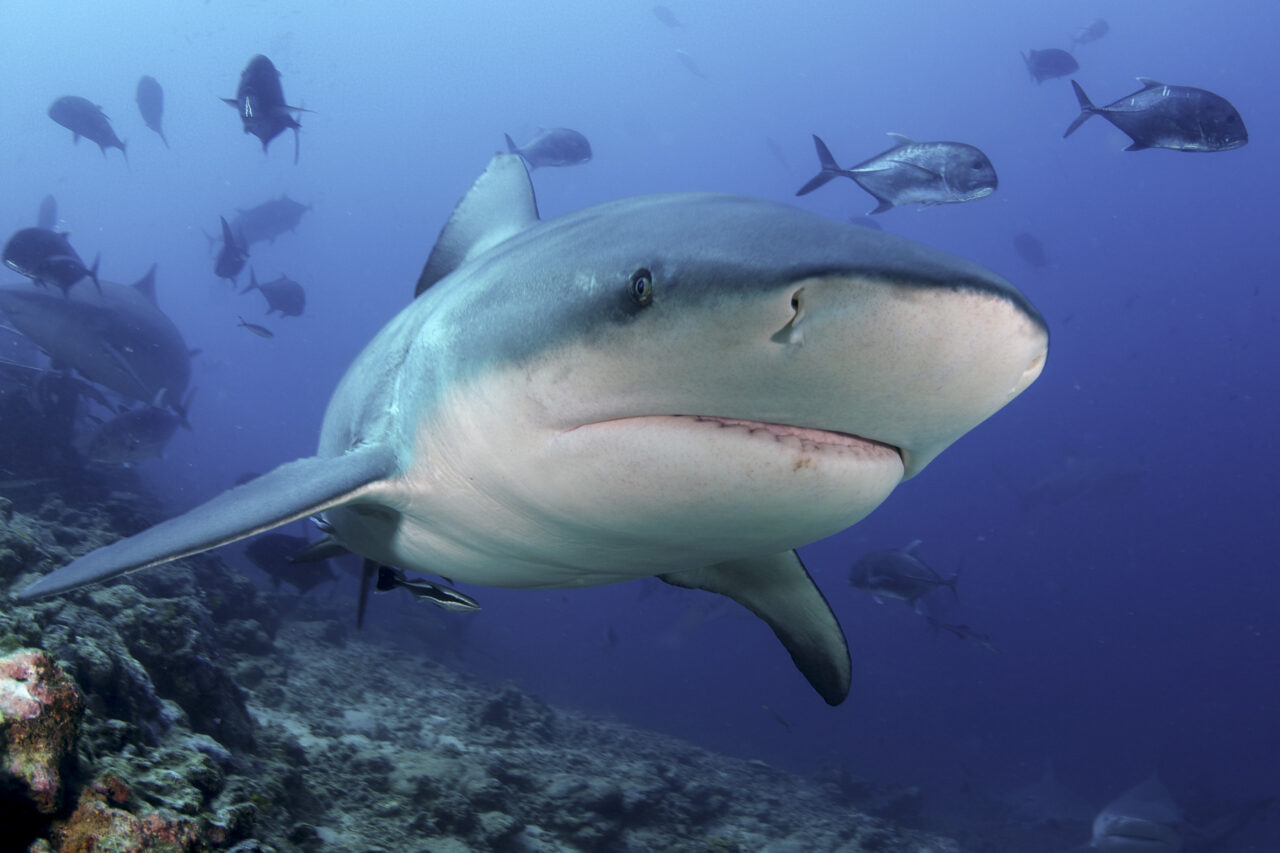
Researchers in the United States have developed a transmitter that can reveal where and when sharks give birth to their offspring, according to Vetenskapsradion.

Sweden's only whale is not easy to see. In the Baltic Sea it is acutely threatened, but outside Kullaberg there is a small colony. There, scientists try to learn more about the porpoise's secret life. With the help of new technology, it can be studied both from above and below the water's surface.

It’s now been scientifically proven. If you stop fishing, the number of fish increases! A new report from the Swedish University of Agricultural Sciences (SLU) confirms that no-take zones enhance fish populations and combat the effects of eutrophication.

Soon a decision will be made about mining at the deepest bottom of the world's oceans. Major stakeholders are in the starting blocks

In the ReCod project in Ar on Gotland, they have now succeeded in getting cod to spawn in captivity. This by trying to imitate the cod's natural environments in the laboratory. During the summer of 2022, it will therefore be possible to release around 1 million cod larvae in three different places in Sweden

Now it is scientifically confirmed. The number of herring fry is dramatically decreasing in the Stockholm archipelago. Scientists suspect that large-scale industrial fishing is largely to blame for the disappearance of herring. Today, the big stickleback reigns: "It's like a locust invasion," says Gustaf Almqvist, a fishing expert at the County Administrative Board in Stockholm.

Supergenes help many species adapt to life in different environments. They are found, for example, in cod, where stocks can live at different depths, and in different temperatures and salinities. Even humans have supergenes – but not much is known about them yet

The round goby was first discovered in Swedish waters in 2008. Today, it is common in many areas and there is every indication that it is here to stay. But what makes the fish so successful? And what will be its impact on marine ecosystems?

