Fish behavior, toxic algae, and the role of the sea in climate. These are some of the topics that marine research can address. Diverse subjects, but with a common goal: to better understand what happens beneath the surface.
The oceans cover more than 70 percent of the Earth’s surface. Despite this, we know less about what happens in the ocean than in space. Marine research is about trying to fill these knowledge gaps. Increasing the fundamental knowledge about the ocean without directly pointing to any application is usually called basic research. But sometimes, basic research sparks thoughts on how the knowledge could be applied in society. Then, basic research becomes the foundation for so-called applied research that aims to solve a problem with direct benefits for society. Since the connection between humans and the sea is so significant, it is not uncommon for research projects to shift between basic and applied research.
The oceans are studied by a multitude of researchers in physics, chemistry, biology, and geology. All these subjects can be linked to oceanography, which is the study of the movements and properties of the sea. This is usually done through observations from expeditions, satellites, and the creation of models. Understanding the movement of water is crucial because it affects the climate worldwide.
Many oceanographers work on environmental, energy, and climate issues in government or the private sector. As an oceanographer, one can also engage in research. Oceanography is a science with a broad spectrum of topics such as ecosystem dynamics, ocean currents, and the flow of various substances in the sea. One who has dedicated her life to the sea is the oceanographer Sylvia Earle, who has become one of the internationally known forces for protecting and restoring the world’s oceans.
Oceanography differs from marine biology because it does not always involve studying what lives in the sea. A marine biologist focuses on living organisms in all parts of the ocean and seeks to understand dynamic interactions on different scales, from a specific location to global.
To understand the complexity of the ocean, oceanographers and marine biologists often combine several fields such as biology and chemistry. Weighing in multiple disciplines is particularly important today to create a comprehensive picture that can contribute to the efforts against climate change, pollution, and other factors threatening the oceans and marine life.
Since many places in the ocean are relatively inaccessible to researchers, technological measuring aids are often used today to study these areas. They can remain in the sea and keep measuring the water’s characteristics around the clock. This makes it easier to obtain more measurement values than if researchers had to travel to the measurement site for each reading.
Oceanographic measurement stations at sea are sometimes called ocean observatories where relevant data is collected for researchers. This can include temperature, salinity, and oxygen levels, as well as wind and waves. The Voice of the Ocean (VOTO) Foundation, for example, works to facilitate data collection for researchers. The team working on research and data collection at VOTO consists of oceanographic technicians and researchers. They use so-called gliders to collect data from five locations along the coast of Sweden, and this information can be closely followed through their observation portal.

When researchers talk about ‘missing data,’ they are referring to replacing previously estimated values with actual, real values in various explanatory models. This can be particularly important in climate change models. Even though approximate values provide a good picture of future climate change, the more reliable the measurement points are, the more robust the model becomes.

Every year, a small group of harbour porpoises traverses a narrow strait from the Black Sea to the Sea of Asov, then returns again, in a natural migration cycle. Since prehistory, these Black Sea porpoises have been isolated, evolving separately from other porpoises, becoming smaller, but with larger snouts. They’re sleek and cute, with eyes and mouths that have the perpetual hint of a smile.

Security is tight as the Baltic Sea gets its largest offshore wind farm, just a few nautical miles from Kaliningrad in Russia. “We must be ready,” warns the Polish government.
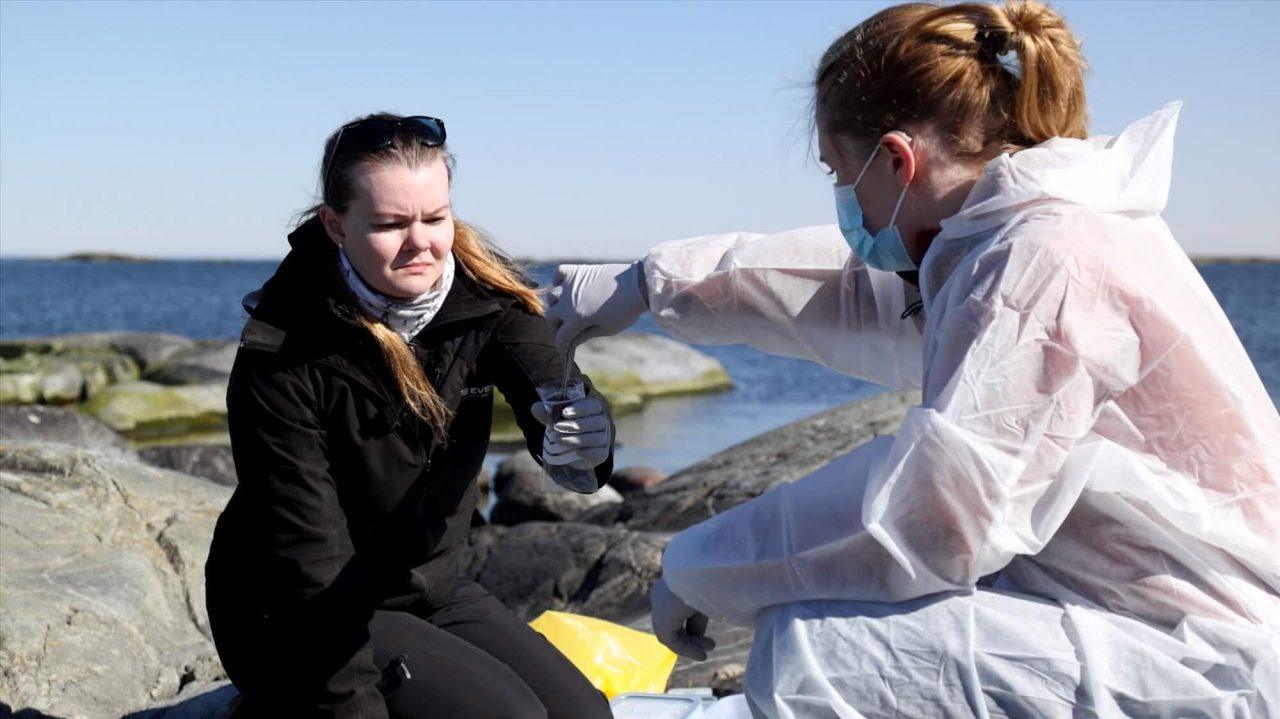
Elina Thorsson works at the Swedish National Veterinary Institute (SVA) as a wildlife pathologist. - In my profession, the primary focus is on disease surveillance in wild animals. Often, we know nothing about the animal; we only know that it was found dead. And we have to find out why.

Far out on the islands of the Stockholm archipelago, Elina Thorson and her team from SVA (the Swedish National Veterinary Institute) collect samples from dead seals to find out how the seals are actually doing. The question is what impact climate change and reduced ice cover are having on their health. Better than expected, as it turns out.

In a uniquely large study, researchers have been able to show how and where sea turtles, whales, albatrosses, and other marine animals travel in the oceans and gather along coastlines. This knowledge provides important information for decisions on which marine areas should be protected first.

You can't see it above the surface, and that's a big problem, because what's happening below the surface is like an ongoing disaster. Until now, the ocean has been our great savior, absorbing almost all the excess energy we've released. But there's a limit to what the ocean can absorb, and it seems like we've exceeded it now.

Both the spiny dogfish and the small-spotted catshark appear to have increased along the Swedish west coast. At the same time, we know that stocks are still low from a historical perspective.

Edy Setyawan, PhD in manta rays, grew up in a small mountain village in Java. Today, he stands among the world’s leading researchers on manta rays and sharks. He has published a remarkable body of scientific work, co-founded an Indonesian-led NGO dedicated to elasmobranch conservation, and was the first to conclusively identify a manta ray nursery habitat in Wayag, Raja Ampat – along with multiple other potential nursery locations throughout Raja Ampat.

Everything we do in the high sea, risks causing damage that cannot be repaired. That's what a group of leading scientists say in a recent article published in the journal Nature. They say it's damaging biodiversity, affecting the climate, and creating huge inequalities in how resources are shared. It is time, they write, that we decide to save the ocean.

Few fish species are as interesting as sharks and rays. These ancient cartilaginous fish have existed and evolved in the Earth's oceans for nearly 400 million years. The Swedish species are no exception. They also attract attention and amazement.

We have better maps of the moon than of the ocean floor. But a partly Swedish-led initiative has now collected data covering a quarter of the deep oceans. ‘There is still a lot undiscovered down there,’ says researcher Martin Jakobsson. - ‘There are surprises in the form of very large volcanic peaks sticking up. You can definitely find something similar to the Kebnekaise massif.

US President Donald Trump has put the axe to the US National Weather Service (NOAA). The hijacking affects both international climate research and local forecasts, experts and staff warn. - It will cost us many lives, a former senior manager told TT.

We have known for a long time that whale poop fertilises the ocean and helps mitigate climate change by sequestering carbon in the ocean. But when they eat in one place and then pee in completely different places, it can be even better for the sea because they then spread fertiliser over otherwise nutrient-poor areas.

In this video we explore the world of whale and dolphin communication. They use sound in extraordinary ways — from the powerful clicks of sperm whales, reaching over 230 decibels, to the unique, individual whistles of bottlenose dolphins. While many of these sounds are used for echolocation, helping them navigate and hunt, some researchers believe they could also serve as a form of complex language.

Collective intelligence. It may sound like something fuzzy, quasi-psychological But in fact, when we came across Iain Couzin's research on flocking insects, animals and fish while making the documentary ‘Intelligence of the Sea’, we suddenly knew we had the documentary's obvious grand finale.

Fish that are farmed on land are considered more sustainable, as it has minimal impact on the environment. But is fish raised on land better off?

(TT) Sharks eating invasive fish, GPS-equipped raccoons and goats attracting a mate and then killing it. All are examples of animals being used to protect nature or other animals. But is it ethically defensible? Maybe not, says a new study.

Bladderwrack from the Baltic Sea has been sent into space. This could be the first step in solving a 30-year-old mystery.

From big and scared to small and brave - evolution has moved at lightning speed on a small island in the Koster Sea on the West coast of Sweden. The beach snail's rapid adaptation after a forced change of environment amazes researchers. In 30 years, it has changed both its appearance and behavior to survive.
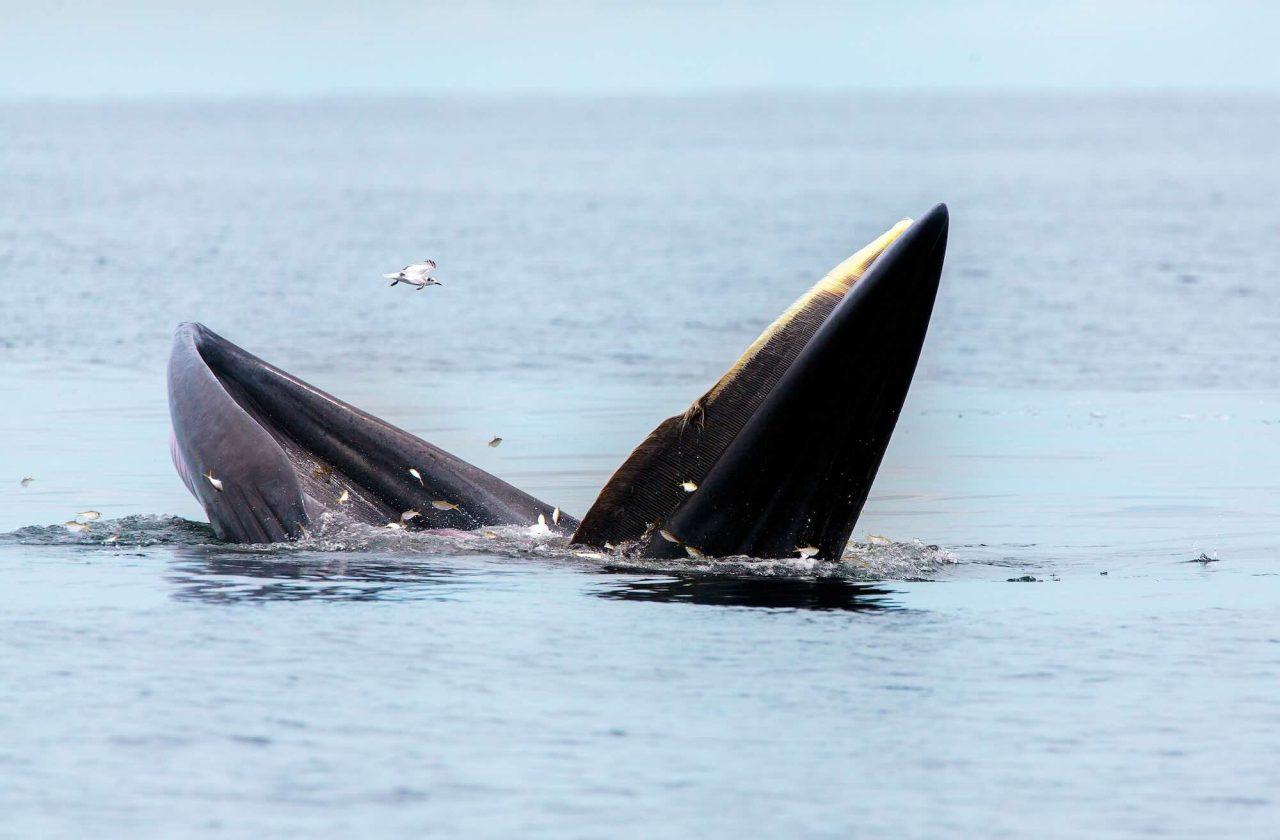
Scientists from the US National Oceanic and Atmospheric Administration (NOAA) have been placing recording devices in the deep Pacific Ocean since 2005. They have collected an enormous amount of data, more than 500 TB or almost 200 000 hours of recordings.

Thousands of biofilter plants have been installed in cities around the world to treat surface water. Now Swedish researchers see a risk that the technology could fail, and that toxic PFAS could flow right through. - This is a big risk for us and for the environment, says researcher Ali Beryani at Luleå University of Technology.

Fish act as a kind of guide, finding the prey and ‘pointing out’ the location to the octopus, which can use its flexible arms to catch the hidden prey.

We know extremely little about what the seabed looks like. Studying and mapping them is difficult, sometimes impossible and certainly expensive. But a researcher in Australia has used sea lions to help map large areas.

