Controversial Swedish farmed fish to hit the shelves this autumn
This autumn, you’ll be able to find Swedish-farmed rainbow trout in supermarkets across Sweden. Fish farmers in the country are making a major push through an initial agreement with the ICA supermarket chain, both parties have confirmed. However, the expansion of Swedish farmed fish is drawing fierce criticism.
Until now, Swedish consumers have been accustomed to the salmon in supermarkets being largely farmed in Norway. This autumn, however, Norwegian salmon will have to share the fish counter with Swedish-farmed rainbow trout.
This has been confirmed by Jussi Kosomaa, commercial director of the Finnish group Nordic Trout, which operates around ten fish farms in Sweden.
Like the lion’s share of Swedish-farmed rainbow trout, their fish has so far been exported – in this case, to Finland.
Smaller volumes
Under an initial agreement with Ica, the fish will now instead be sold in Swedish supermarkets.
´The Swedish market is overwhelmingly dominated by Norwegian salmon. Now we can capture a significant share of the market,´ says Jussi Kosomaa.
One reason why the salmon in Swedish shops usually comes from Norway is that fish farmers in Sweden have often not had sufficiently large volumes to guarantee year-round supplies to retail chains.
To strengthen the country’s food security, the government has introduced legislative changes designed to benefit Swedish fish farming, which, amongst other things, means that the requirement for a farming licence in its current form will be abolished.
Edvin Nestor, category manager at ICA Sweden, confirmed in an email reply to TT that, from this autumn, ICA stores will be able to stock the products and make them available to customers. The initiative ´is very much in line with the chain’s efforts to promote ASC-certified products produced in Sweden,´ he states.
Fish feed and escapes
One person who does not welcome such an expansion is Inger Melander, marine and fisheries expert at the World Wide Fund for Nature (WWF).
She argues that it is not enough for this company to boast several ASC-certified farms in Sweden (a certification programme for responsible aquaculture).
´In our view, the ASC standards are too low. The fish feed used at fish farms in both Sweden and Norway contains fish from wild stocks in the sea and contributes to overfishing in our seas.´
In WWF’s consumer guide, the ‘Fiskguiden’, a yellow warning light is flashing for all char and rainbow trout farms in Sweden, partly due to the fish feed and escapes. Earlier this summer, six tonnes of rainbow trout also escaped from one of Nordic Trout’s farms in Lake Siljan.
From a food security perspective, is Swedish-farmed rainbow trout better than Norwegian?
´No. A Swedish mistake is no better than a Norwegian one,´ says Inger Melander.
TT
In July this year, new fisheries legislation came into force. Among other things, this means that the requirement for a farming licence in its current form will be abolished.
Many aquaculture operations are therefore no longer subject to the detailed animal welfare requirements set out in the Swedish Board of Agriculture’s regulations on fish farming. However, anyone keeping fish in aquaculture operations is still subject to the Animal Welfare Act and the Animal Welfare Ordinance.
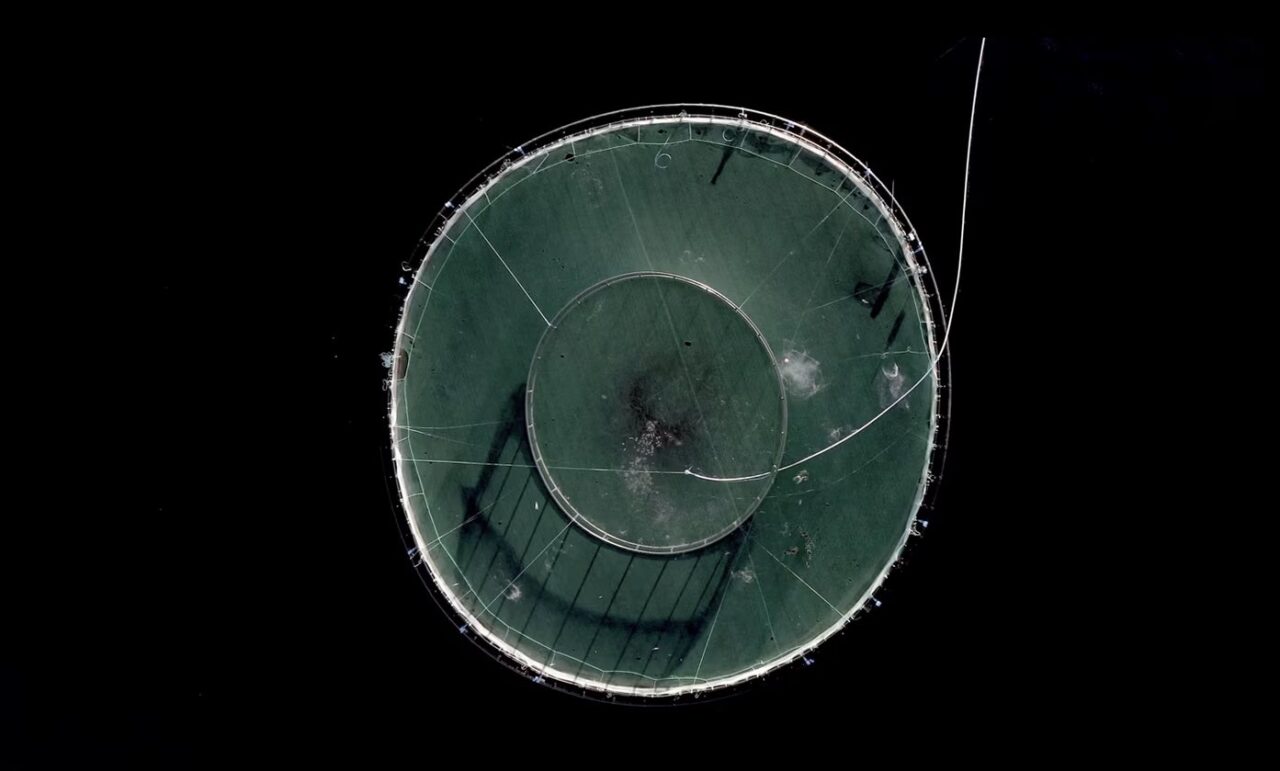
The most common method of farming fish for food is in large or small net cages in a lake or off the coast. Fish farming in cages and at sea can lead to eutrophication of the water.
In Sweden, around 10,000 tonnes of fish are farmed annually, across some 40 farms.
The most commonly farmed species are rainbow trout, brown trout and char.
Over 90 per cent of the farmed fish consumed in Sweden is imported, and a large proportion comes from Norway.
Sources: The Swedish Board of Agriculture, SLU (Swedish University of Agricultural Sciences), the Swedish Fish Farmers’ Association and the World Wide Fund for Nature (WWF).