Chronicle: Oil and the world’s oceans share a grim history
I’m old enough to remember the Torrey Canyon, a tanker that sank off the British Isles in 1967. 120 000 tonnes of crude oil poisoned the South coast of England for years. In the 1970s catastrophic oil spills came from the Amoco Cadiz and the Atlantic Empress, both in North America, with even larger oil spills.
Later the Gulf of Mexico was hit by two disasters connected to oil drilling – Ixtoc I in 1979 and Deepwater Horizon in 2010 – creating oil spills larger than all the sunken tankers taken together.
Oil and the oceans have a gloomy joint history.
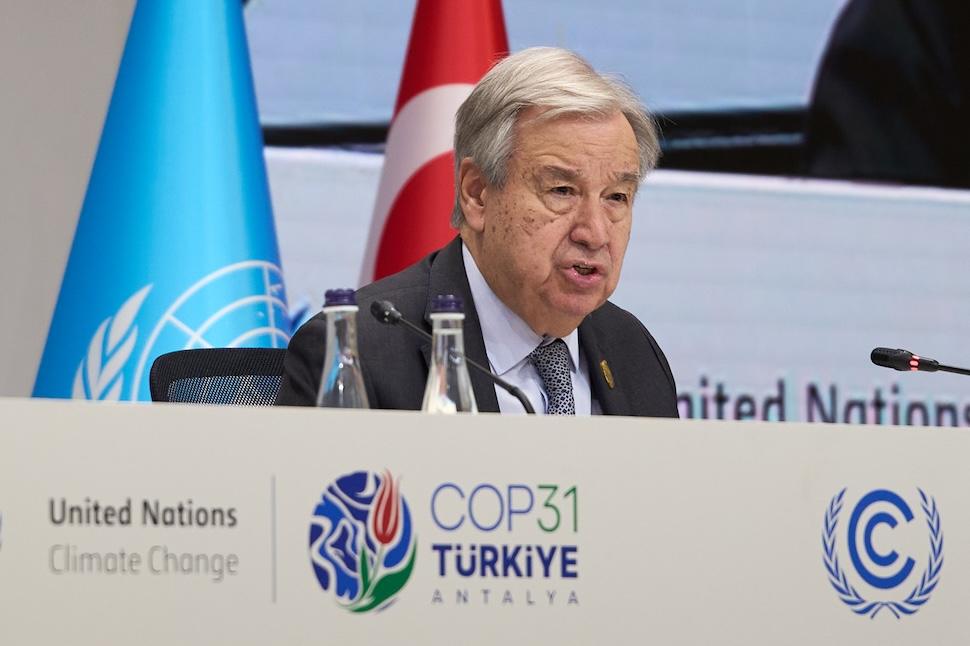
But isn’t the greatest international oil catastrophe what happened during the last few weeks: the combined effect of the curious meeting with ”The Three Wise Men” in Shenzhen in China and the break-down of the COP 31 climate summit in Antalya in Turkey? Messrs Xi, Putin and Trump heralded a ramping-up of international oil distribution, despite ongoing wars in the Persian Gulf and Red Sea regions. While at the same time a small group of oil producing nations, headed by Russia, torpedoed what was supposed to be the closing agreement at COP 31, including a substantial section of protection for the oceans, a promise to both safeguard the small island nations and strengthen the sea as a safeguard against global warming. China kept a low profile; Trump’s America wasn’t even in the room. The EU countries fought in vain to include a text on phasing-out fossil fuels. But oil won the day, the oceans lost.
Financing disappeared
What is it in fact that the Pacific island nations and the rest of the ocean world missed out on? The proposed Antalya Ocean and Seas Compact contains the furthest-reaching promise so far from the wealthy nations “to strengthen and carry out sustainable sea-based measures in their national climate goals and planning”. In concrete terms: ”Ambitions to restore by 2035 at least 20 per cent of damaged coastal regions, establishing early warning systems for vulnerable coastal communities, and support for blue financing”. The fact that the text on financing disappeared in the last minute was probably the most discouraging of all for the small island nations, who already feel their existence threatened by rising sea levels.
Battle not lost
The disappointment caused by the failure to reach an agreement in Antalya, doesn’t mean that the battle is lost. The island nations and those who fight for the oceans place their hopes with regional initiatives and other international fora where the oceans are in focus. Next in turn is the UN water conference in Abu Dhabi in December 2026. Its first-hand focus is finding methods to safeguard drinking water for two billion people on the planet, who are now threatened with water shortage because of diminishing groundwater, lakes and glaciers. The conference is also a forum that puts the supply of water in the context of global warming and the climate crisis. Politicians and decision makers are faced with a united scientific community demanding rapid and decisive measures to halt global warming. The UN climate goals are in principle mandatory for members, regardless of their dependence on oil.
There are also regional initiatives that take a clear stand to safeguard the well-being of the oceans by speeding up the devolution of fossil fuels. Sweden is an active member in the small group named BOGA (Beyond Oil and Gas Alliance), formed in 2021. It unites both countries and regions trying to stay within the UN climate goal of max 1,5 degrees temperature rise. BOGA’s reach is however limited by the fact that it includes only countries that can cut down on fossil fuel consumption – none of the large oil or gas producing countries has showed any interest in joining.
Ethiopia takes the lead
One country that has become – on its own initiative – a frontrunner in the fight against fossil fuels is Ethiopia. In a combined effort to improve its poor financial standing and to do something for the climate, Ethiopia in 2024 introduced a total ban on the import of used or new cars with combustion engines. At the same time lowering duties on electric vehicles. Domestically produced fossil gas can still be used for heavy vehicles, but the country makes a concerted effort to switch to renewable electricity in the form of hydroelectric and solar energy. The fact that a relatively poor, land-locked country in the Global South could do something important for the world oceans may seem utopian. But it does have a symbolic effect that could signal something more meaningful.

COP 31 was a sad failure in the coastal and island countries’ fight for the oceans, to the extent that it puts the credibility of the whole UN system in question. COP 32 is scheduled to take place this time of year in 2027 in the Ethiopian capital of Addis Abeba, also the seat of the African Union. Hopefully, the host country’s delegation has seen and learned a lesson from the failure in Antalya to avoid a repetition. Ethiopia’s promise is a climate summit focused on real cut-down of emissions. It will be near-impossible to avoid mentioning fossil fuels. COP 32 may be the last chance of restoring UN’s credibility as a forum for the future of the blue planet.
About Deep Sea Reporter: Our ambition is to examine and report on issues related to the sea and the life that exists beneath its surface. We operate in the public interest and are independent of political, commercial, and other interests in society.