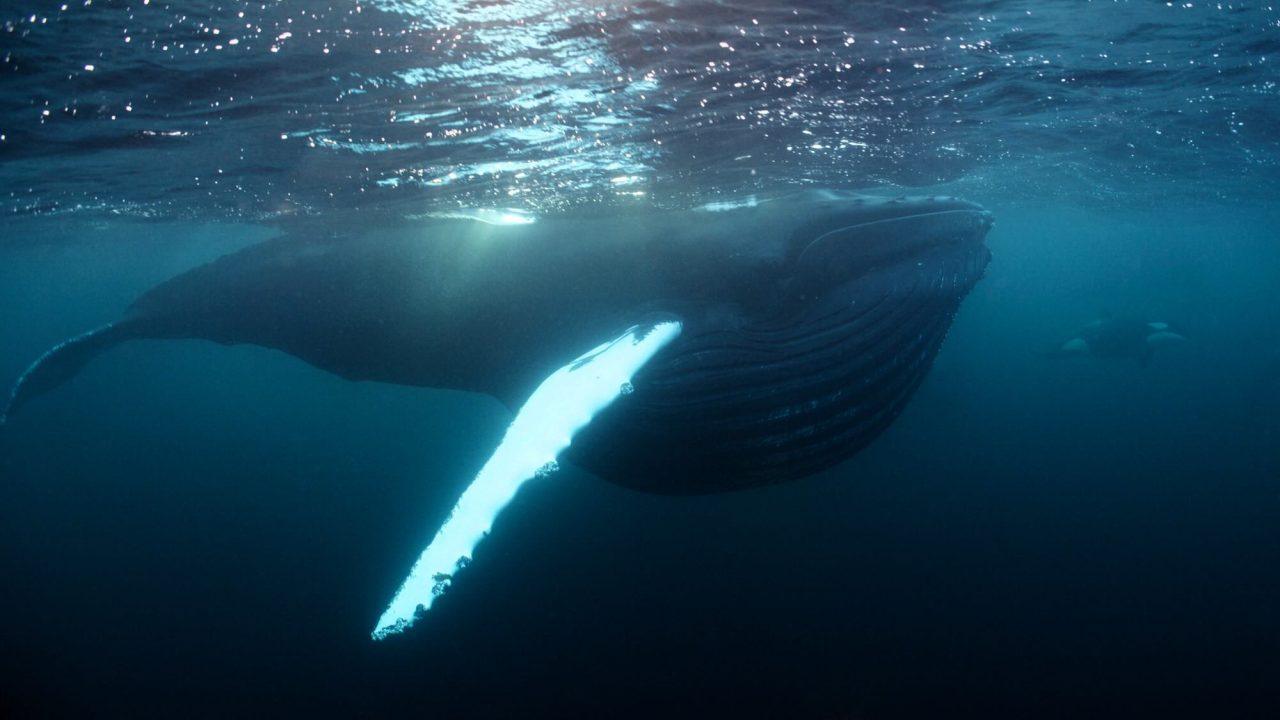
Whale graveyard creates ecosystem on the seabed
7,000 metres down in the Indian Ocean, where no sunlight reaches, there are ecosystems unlike anything else. The main players? Whale carcasses.
´It is an exceptional discovery,´ says Björn Källström, a marine biologist and researcher at the Maritime Museum and Aquarium.
A spectacular whale graveyard has been discovered on the seabed of the Indian Ocean off Australia’s south-west coast, in an area known as the Diamantina Trench. The V-shaped depression in the seabed stretches for around 120 mil and reaches depths of up to 7,000 metres. The scale is immense: researchers estimate that there are over ten million whale carcasses in the area. The oldest fossils are estimated to be around 5.3 million years old.
´It was a complex feeling – a little frightening, but also fascinating from a scientific perspective,´ writes Xiaotong Peng, one of the researchers behind the discovery, in a comment to TT.
´It involved dead bodies, but at the same time a teeming, living ecosystem,´ he continues.
The research team, of which Xiaotong Peng is a member and which first discovered the whale graveyard, has been studying it for several years and has carried out 32 dives to the depths. Using a remotely operated underwater vehicle that filmed and surveyed the seabed, the researchers collected samples from 485 locations.
Most of the remains found were from deep-sea beaked whales, which swim to extreme depths to hunt squid and sharks, amongst other prey.
The finds also included a five-metre-long carcass of an Antarctic right whale, as well as a skeleton of the extinct whale species Pterocetus benguelae, which lived 5.3 million years ago. It is on the basis of the discovery of this fossil that the researchers have determined the age of the whale graveyard.
In addition, a previously unknown whale species was found, which the researchers named after the site where it was discovered, the Diamantina Grave: Pterocetus diamantinae.
There are several reasons why the Diamantina Grave in particular has become the final resting place for such a large number of whales, explains Björn Källström, a marine biologist and researcher at the Maritime Museum and Aquarium.
´It’s a fault zone that extends downwards and forms a sort of funnel at the seabed,´ he says.
´And if the seabed looks like a funnel, the whales will sort of tumble down into it, deeper and deeper,´ he continues.
Although beaked whales are used to diving deep, the depth of the grave can prove overwhelming.
´They are mammals that breathe air, and even though they can dive down to a depth of three thousand metres for an hour, there is a high risk that they will die down there,´ says Björn Källström.
The discovery of the graveyard was astonishing. But the treasure turned out to be much greater than just the skeletal remains or the ‘archive’ of deep-sea whales, as the researchers describe it. Far down on the seabed, without even a glimmer of sunlight or daylight, ecosystems are building up around the whale carcasses.
´You could call it a deep-sea desert,´ says Björn Källström, continuing:
´And then, bang, a whale full of energy, nutrients and food plonks down there. It becomes like an oasis.´
A single carcass becomes a smorgasbord for marine animals and organisms. The feast can last for several years and involves several stages.
The scavengers are first in line. They eat the soft flesh: the whale’s tissue and blubber.
But what’s really exciting is when the skeleton remains, says Björn Källström, talking about the next stage, when smaller animals and bacteria – “whale carcass specialists” – take over from the scavengers.
´It has been found that the whale skeleton – the whale bones – contains very nutrient-rich oil,´ he says.
The ecosystem is built up by bacteria that break down the oil and recycle it. Furthermore, mussels, for example, feed on the bacteria.
´So, in a way, a whole ecosystem forms down there, built entirely on the energy derived from the oil in the whale skeletons,´ says Björn Källström.
´Ten years ago, I would have said that there is low biodiversity on the seabed, but research today shows that, on the contrary, there is high biodiversity at depth.´
The whale is a mammal with around 80 extant species, divided into the suborders baleen whales and toothed whales.
Due to its adaptation to a life spent entirely in water, the whale differs so greatly from other mammals that it was long considered to be a completely separate group of animals.
Whales are found in all the world’s oceans. Some species are also found in large rivers.
The whale’s body is streamlined, smooth and hairless, and lacks skin glands.
To protect against the cold, whales have a thick layer of blubber.
Some species of whale can remain submerged for up to an hour because they are able to utilise oxygen from the air more efficiently than other mammals.
The whale’s brain is very large and, in appearance, resembles that of both ungulates and carnivores.
All whales can vibrate their larynx to produce sounds and communicate. They use sound for echolocation.
Source: Artdatabanken, NE.