

Whales Carry Dangerous Virus – Discovered With Drones
Several species of large whales in the North Atlantic carry a potentially deadly virus. This is according to a study in which researchers used drones to examine the exhaled air of these enormous animals.

A sperm whale photographed off Dominica in the Caribbean. Sperm whales off the Norwegian coast have been found to carry a deadly virus.
The researchers, who describe their findings in the scientific journal BMC Veterinary Research, used small drones that they hovered just above the whales. Samples from the exhaled air, which is clearly visible even from a long distance and resembles a fountain, were collected using Petri dishes, small glass dishes used in laboratories to cultivate microorganisms.
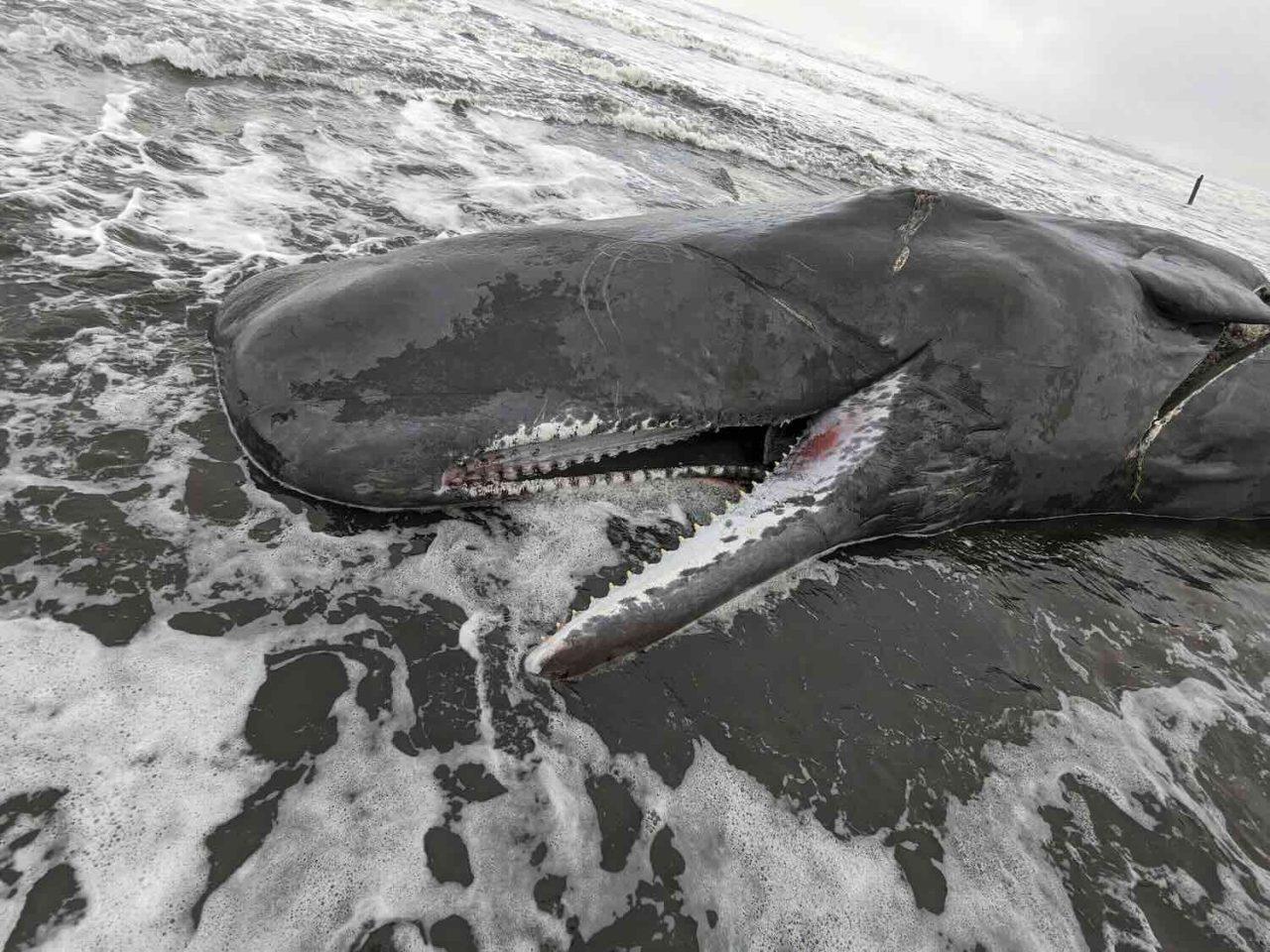
A sperm whale that washed ashore and died on the coast of Oregon in the western United States. Many whales and dolphins that have washed ashore have been found to carry the morbillivirus, which can damage the animals’ lungs and immune systems.
Deadly virus
The experiment was conducted off the coast of northern Norway, where groups of humpback whales, herring whales and sperm whales are found at different times of the year. Samples were also taken off northern Iceland and at Cape Verde further south in the Atlantic, where humpback whales can be seen in spring and summer.
A number of skin samples were also taken from humpback whales and sperm whales off the Norwegian coast. In addition, samples were taken from the liver and kidneys of a pilot whale that had died after first being observed with clear signs of illness.
The analyses gave rise to some concern among the researchers. A morbillivirus previously found in dolphins was found in the exhaled air of two groups of humpback whales and one sperm whale, as well as in the kidney sample from the sick pilot whale.
Morbillivirus is closely associated with fatal outbreaks among various species of baleen whales and dolphins, as well as among other toothed whales around the world. The virus damages the lungs and makes breathing difficult. It can also cause neurological damage and severely impair the immune system. This is the first time it has been found in the north-eastern Atlantic.
Mass death
In several cases, morbillivirus has caused mass deaths. Large groups of dolphins or whales have been stranded along the coasts in various regions, and all attempts to rescue them have been unsuccessful.
Various herpes viruses were also found in samples from the humpback whales. Fortunately, however, no traces of the extremely dangerous bird flu were detected.
Most of the whales in the study that carried the virus appeared completely healthy, which can be interpreted as meaning that they are not affected, or are only affected if they are starving or otherwise ill. However, this example shows that it is important to monitor the presence of dangerous microorganisms in the oceans.
Whales, dolphins and porpoises belong to the order Cetacea. More than 90 species have been described, of which 16 are baleen whales and the rest are toothed whales.
Five species are classified as critically endangered on the international red list: the Asian river dolphin from the Yangtze River in China, the California porpoise from the Gulf of California in western Mexico, the Cameroon dolphin from the coastal waters of West Africa, the North Atlantic right whale from the east coast of North America, and Rice’s whale from the Gulf of Mexico.


