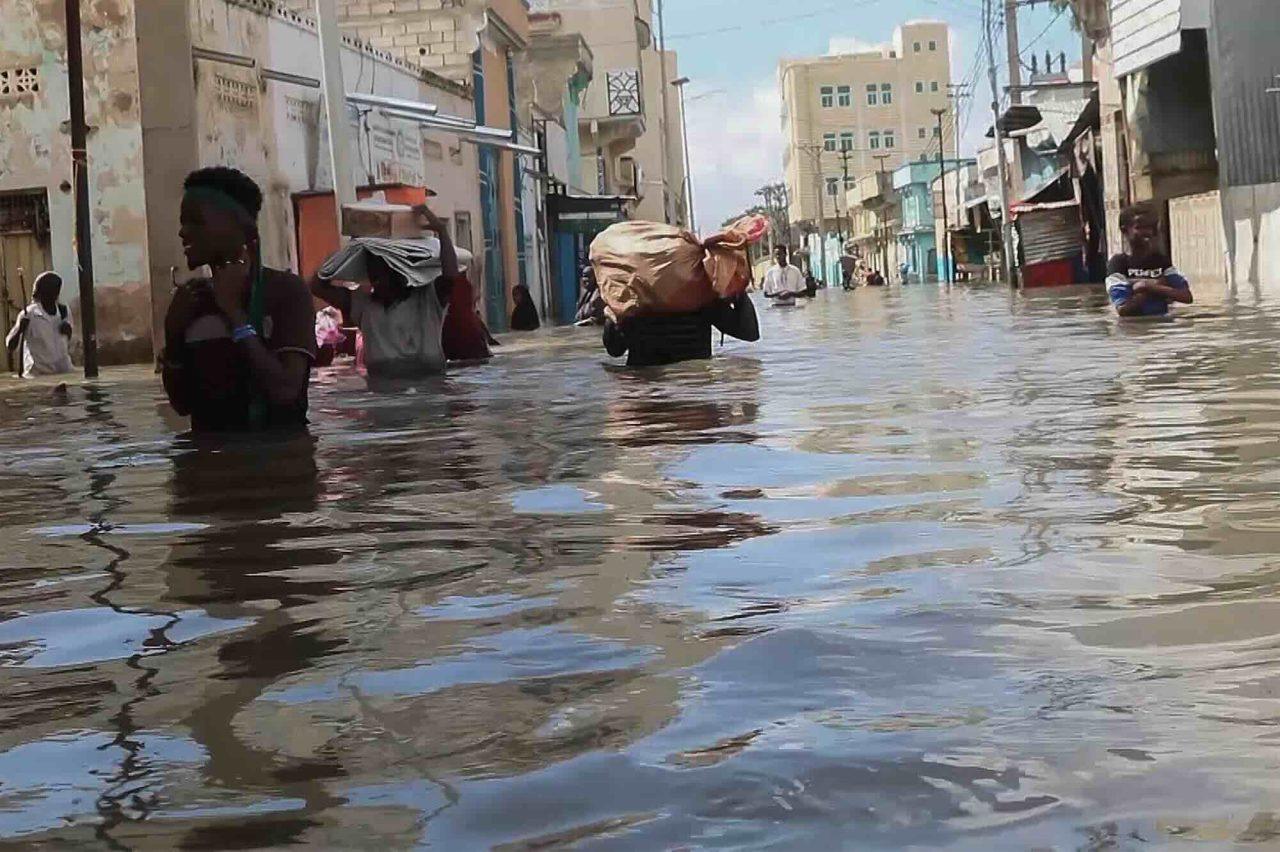
Built flood defences – a critical situation straight away
Following the flood in 2000, Arvika Municipality decided that it must never happen again. Twenty years later, the flood defences were completed.
They were put to use almost immediately.
The cost of the flooding was high. Property damage totalling 300 million kronor, the disruption of essential public services, and environmental damage that persists to this day.
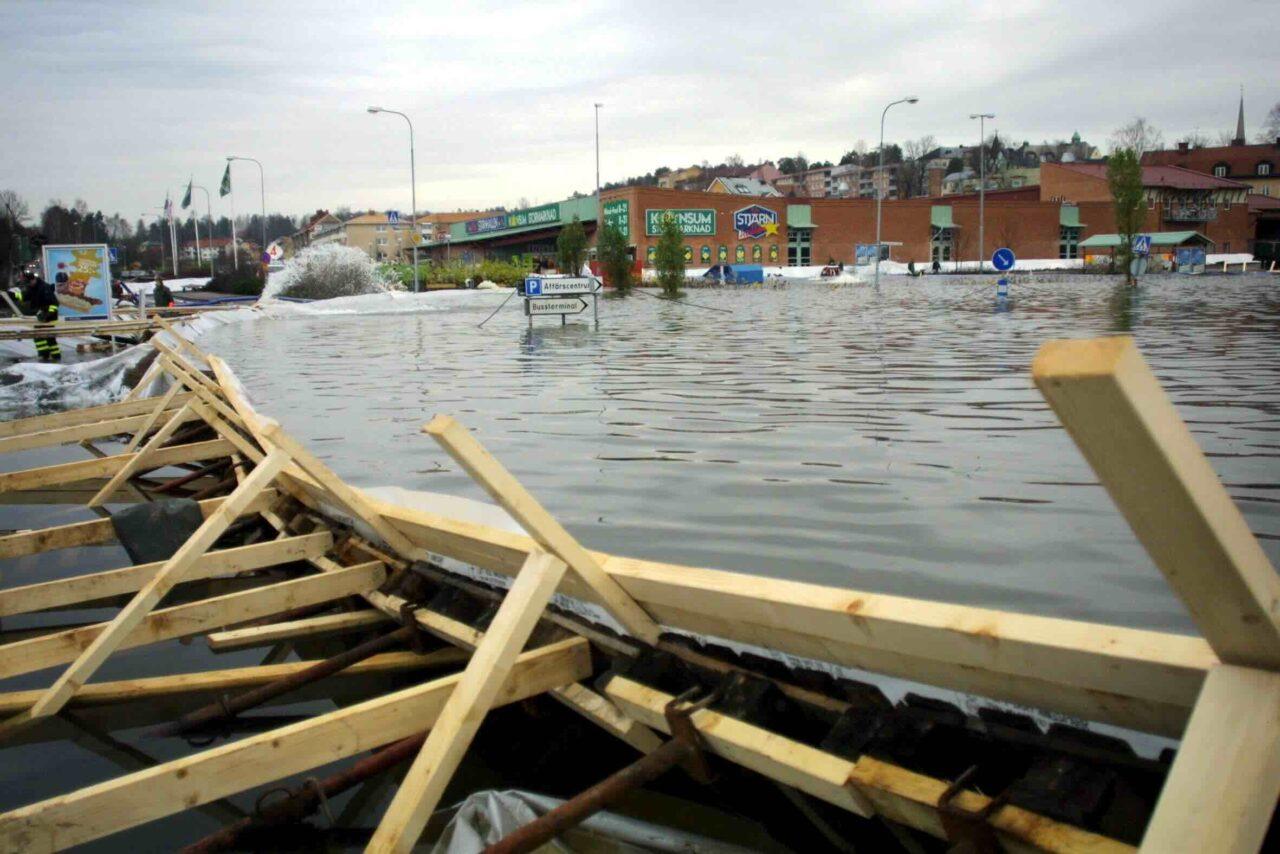
Mattias Larsson is the head of the rescue services in Arvika. He praises the local councillors for the decision they took following the flooding.
‘It was clear that climate change would affect water levels, and they had the courage to develop and drive forward such a large-scale project. It takes courage to take on such a long-term responsibility and make such significant investments.’
High demand
Arvika was an early adopter. In recent years, local authorities’ interest in climate adaptation has grown, particularly the need for and interest in flood mitigation measures, explains Mette Lindahl Olsson, Head of the Natural Disasters and Climate Adaptation Section at the Swedish Civil Contingencies Agency (MCF).
‘We can see that local authorities have grasped the seriousness of the situation. We are also noticing in Sweden that torrential downpours are becoming increasingly intense and that forest fires risk spreading ever more rapidly due to drier conditions. This can cost lives, pose a threat to health and damage vital societal functions.’
Local authorities wishing to adapt to climate change can apply to the agency for grants to fund measures against landslides, mudslides, flooding and erosion, and receive reimbursement for up to 60 per cent of the cost.
‘The demand for grants is much higher than the 500 million kronor we have available.’
When work on the flood defences in Arvika began, it was thought they might be needed once every twenty, or perhaps a hundred, years. Now they have already been activated twice. The first time was in 2020 – the very year they were completed.
47 metres
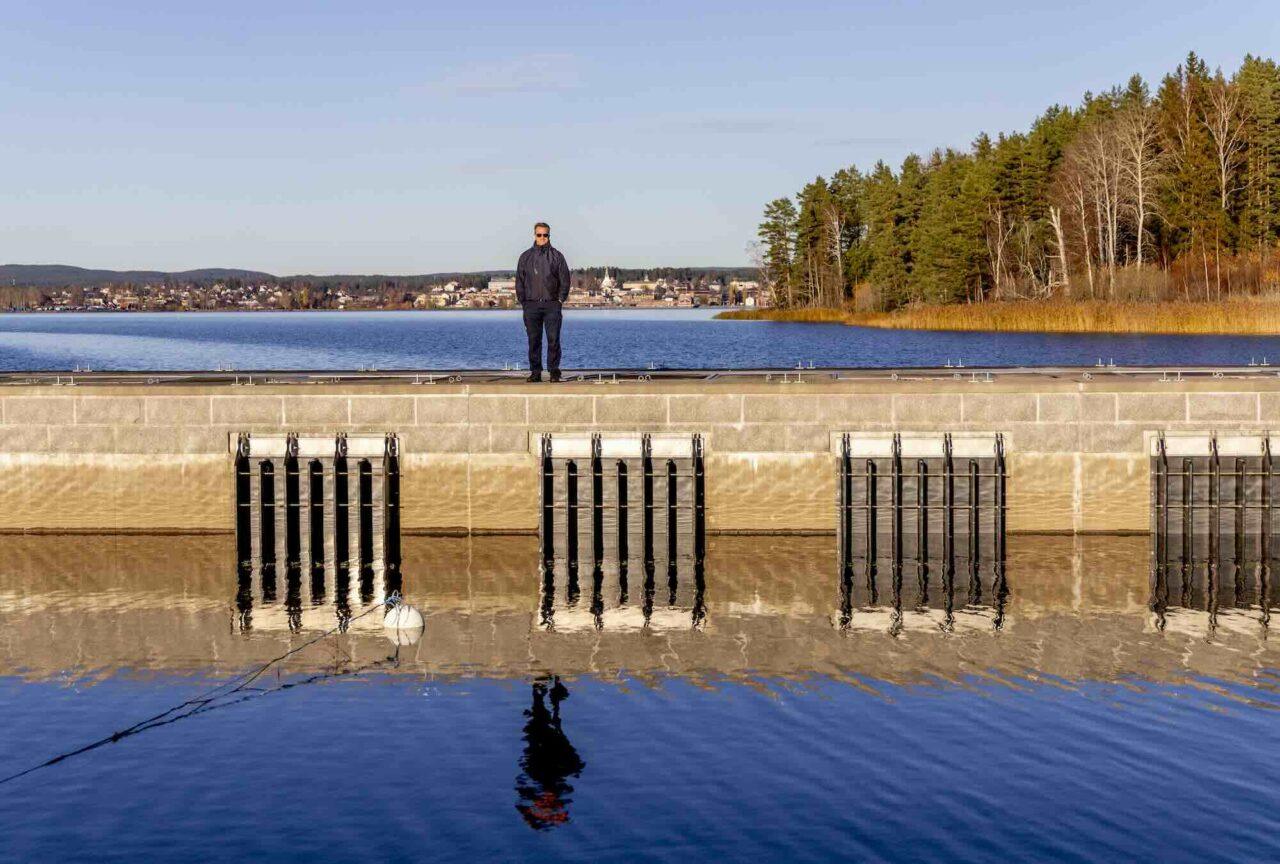
The flood defences don’t look particularly impressive – a concrete structure, like a half-finished bridge, spanning a narrow strait. When activated, it is closed off by thick steel gates that prevent water from flowing between Glafsfjorden and Kyrkviken.
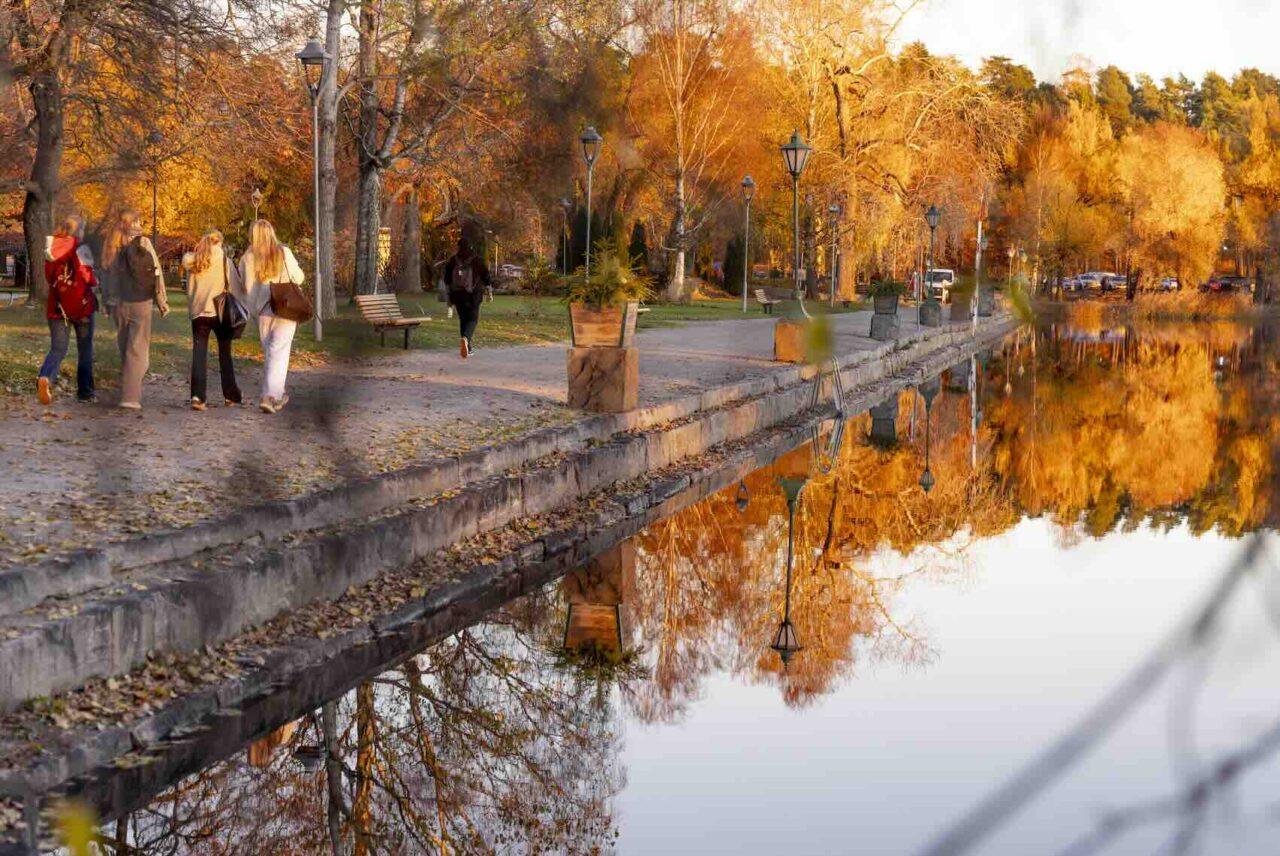
47 metres above sea level is the magic threshold. At that point, the water rises over the quay edge in the town park and flows further into the town. At the town hall, a sign shows how high the water rose in 2000 – almost up to an adult’s waist.
‘When it reaches 46.80, problems start to arise, and when the forecast predicts 47, we close the flood defences,’ explains Robin Olsson of the Arvika emergency services.
Strictly speaking, the system should be test-run every five years to ensure it is working properly. Head of Rescue Services Mattias Larsson does not believe this will be necessary – it will be used in real-life situations so frequently.
‘The effect of a changing climate is that it increases the frequency with which we have to use the protection.’
‘Today, there is a level of climate scepticism that wasn’t an issue in 2000. I haven’t heard of anyone questioning the project back then, but it’s possible that people would do so if someone were to propose the same thing today.’
Ambitionen är att vattennivån i Kyrkviken ska ligga något under 47 meter över havet. Visar prognoserna att vattennivåerna riskerar att nå över det kan kommunen besluta om att aktivera skyddet. Det aktiveras om vattennivån kan komma att påverka samhällsviktig verksamhet som reningsverk, gator och krematoriet.
The permanent section of the flood defences has a total height of 48 metres above sea level, but can be extended by a further 2.5 metres. During the flood of 2000, the water reached a maximum level of 48.9 metres above sea level.
The flood defences are situated in the strait between Kyrkviken and Glafsfjorden and can be closed using large steel gates that are operated manually. They feature five large pumps with a capacity to pump 30 cubic metres of water per second.
The defences were completed in 2020. The total cost was 264 million kronor. The municipality’s share of the cost, after government grants, was approximately 106 million kronor.
Source: Arvika Municipality.